
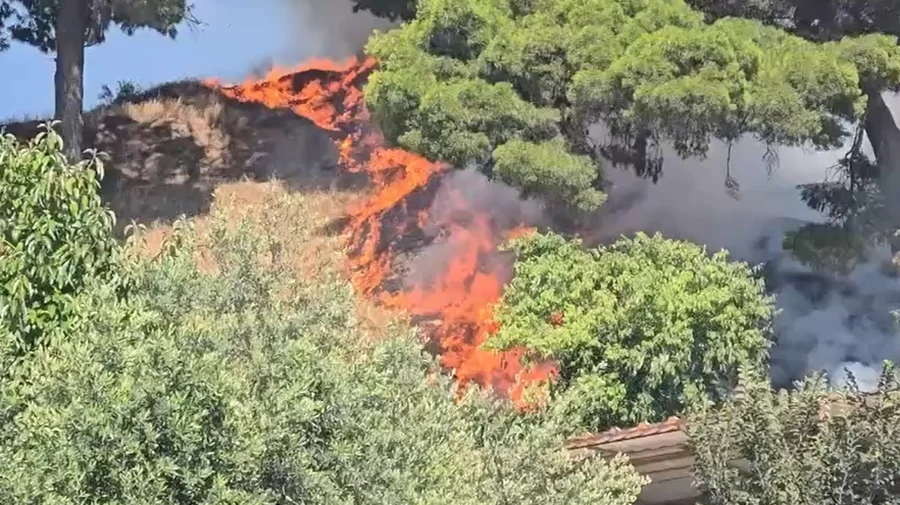
Vlora, Albania – A significant wildfire erupted on Wednesday afternoon on the slopes of Kuzum Baba hill in Vlora, rapidly spreading through dry shrubs and vegetation and posing an immediate threat to residential areas and the revered Kuzum Baba Teqe, a site of profound religious and historical importance to the city. The incident has mobilized the Vlora Fire Service, whose teams are engaged in an intensive battle against the flames amidst challenging conditions.
The fire, which began in the early afternoon hours, quickly escalated due to a combination of dry weather, flammable vegetation, and potentially adverse wind patterns. Initial reports indicate a substantial area of the hill, known for its panoramic views and cultural landmarks, has already been consumed by the inferno. The precarious proximity of the blaze to densely populated neighborhoods and the centuries-old Teqe has heightened concerns, prompting a swift and robust response from emergency services.
Main Facts
The tranquility of Vlora’s afternoon was shattered by plumes of smoke rising from Kuzum Baba hill, a prominent natural and cultural landmark overlooking the city and the Adriatic Sea. The wildfire, reported around 15:00 local time, rapidly gained intensity, fueled by the parched Mediterranean scrubland and bush that characterize the hill’s ecosystem.
The immediate focus of the Vlora Fire Service, dispatched moments after receiving the alarm, is to establish containment lines to prevent the fire’s uncontrolled expansion. Their primary objectives are twofold: to safeguard the numerous residential properties nestled on the lower slopes and at the base of the hill, and crucially, to protect the Kuzum Baba Teqe. This historic Bektashi shrine, with its distinctive architecture and spiritual significance, stands as a vulnerable sentinel against the encroaching flames. The Teqe, a pilgrimage site and a symbol of interfaith harmony, represents an irreplaceable piece of Albanian cultural heritage, making its preservation a top priority for both local authorities and the wider community.
The situation remains dynamic and deeply concerning, with firefighting crews working tirelessly to douse the blaze before it reaches critical infrastructure or causes irreversible damage to the cultural monument. Local residents have been advised to remain vigilant, and emergency protocols are being reviewed should an evacuation become necessary. The incident underscores the perennial challenge of wildfires in the region, particularly during periods of prolonged dry spells and elevated temperatures.
Chronology of Events
The unfolding drama on Kuzum Baba hill began with a series of rapidly escalating events, painting a vivid picture of the emergency response and the challenges faced by those on the front lines.
Wednesday Afternoon – The First Sign:
Around 14:30, initial observations of smoke emanating from the western slopes of Kuzum Baba hill were reported by local residents. What might have initially appeared as a small, localized incident quickly developed into a more serious threat. Eyewitnesses described seeing a rapid intensification of the smoke, followed by visible flames within minutes, suggesting the fire took hold aggressively in the dry undergrowth. The exact ignition point and cause remain under investigation, but preliminary assessments often point towards human activity, either accidental or deliberate, given the accessibility of the area.
15:00 – Emergency Notification and Dispatch:
The first official notification reached the Vlora Fire Service emergency dispatch center shortly after 15:00. Callers, some of whom were residents living closest to the hill, reported a rapidly spreading fire moving uphill and threatening nearby structures. The urgency of the calls prompted an immediate activation of emergency protocols. Within minutes, multiple fire engines and specialized firefighting units were dispatched from the main Vlora fire station. The swiftness of the response was critical, recognizing the potential for rapid escalation in such terrain.
15:30 – Arrival at the Scene and Initial Assessment:
The first firefighting crews arrived at the base of Kuzum Baba hill by approximately 15:30. Their initial assessment confirmed the severity of the situation. The fire, fanned by light but persistent winds, had already consumed a significant portion of the hill’s vegetation. The steep, uneven terrain presented immediate logistical challenges for positioning equipment and deploying personnel. Firefighters quickly began to evaluate the most critical points of attack, prioritizing areas adjacent to residential zones and, crucially, the Kuzum Baba Teqe, which stood precariously close to the advancing flames.
16:00 – Establishing Containment Lines:
By 16:00, additional units had arrived, allowing for a more comprehensive strategy. Teams were deployed on multiple fronts, attempting to create fire breaks and douse the perimeter. The primary strategy involved a direct attack using high-pressure hoses where accessible, while also focusing on preventing the fire from cresting the hill and descending into the more densely populated eastern slopes or spreading laterally towards other sensitive areas. The dry shrubs and thorny bushes, characteristic of the Mediterranean maquis, acted as highly flammable kindling, making containment a difficult and labor-intensive process.
17:00 Onwards – Escalation and Ongoing Battle:
As the afternoon progressed, the battle intensified. The fire showed no signs of abating easily, requiring continuous efforts from the weary firefighters. The smoke plume became denser and more widespread, visible from various parts of Vlora and beyond. Concerns grew among residents, many of whom gathered at safe distances to watch the distressing scene unfold. Local police and municipal authorities also arrived to manage traffic, ensure public safety, and coordinate potential evacuation routes if the situation deteriorated further. The fight continued into the evening, with crews rotating to maintain momentum, underscoring the resilience and dedication of Albania’s emergency responders in the face of natural hazards. The ongoing efforts are a testament to their commitment to protecting both lives and invaluable cultural heritage.
Supporting Data and Context
The wildfire on Kuzum Baba hill is not merely an isolated incident but rather a symptom of broader environmental vulnerabilities and historical significance that define the region. Understanding these underlying factors provides crucial context to the current crisis.
The Significance of Kuzum Baba:
Kuzum Baba is more than just a hill; it is a spiritual and cultural beacon for Vlora. At its summit lies the Kuzum Baba Teqe, a Bektashi shrine believed to be the resting place of a dervish named Kuzum Baba. Founded likely in the 17th or 18th century, the Teqe has served as a center for Bektashi Sufism, a mystical branch of Islam prevalent in Albania. Its whitewashed walls and serene atmosphere have long drawn pilgrims and visitors seeking solace and panoramic views of Vlora Bay and the surrounding landscape. The Teqe is not just a religious site; it’s a historical monument, having witnessed centuries of Vlora’s development, from Ottoman rule to Albanian independence. Its destruction would be an irreparable loss to Albania’s cultural and spiritual heritage. The hill itself is a beloved recreational area, popular for walks and picnics, offering unparalleled vistas that attract both locals and tourists.
Ecological Context and Fire Risk:
The vegetation on Kuzum Baba hill is typical of the Mediterranean climate: dry, low-lying shrubs, maquis, garrigue, and scattered Aleppo pines. Species like juniper, heather, and various aromatic herbs, while ecologically vital, become highly flammable tinderboxes during prolonged dry spells. Albania, like much of the Mediterranean basin, experiences hot, dry summers, creating ideal conditions for wildfires. The absence of significant rainfall for weeks or months leading up to the incident, coupled with rising temperatures, would have desiccated the vegetation, making it extremely susceptible to ignition and rapid spread. Such fires can lead to severe soil erosion, especially on steep slopes, and destroy local biodiversity, impacting insect life, small mammals, and bird populations.
Urban Proximity and Population Density:
Kuzum Baba hill is not an isolated wilderness. Its lower slopes are integrated into the urban fabric of Vlora. Residential neighborhoods, comprising a mix of older family homes and newer apartment blocks, are situated directly adjacent to the hill’s base. This urban-wildland interface creates a high-risk scenario. The close proximity means that a rapidly spreading fire can quickly threaten lives and property, necessitating immediate evacuation plans and placing immense pressure on emergency services. The population density in these areas amplifies the potential for widespread damage and displacement.
Seasonal Fire Trends in Albania:
Wildfires are a recurring annual challenge for Albania, particularly between July and September. The country’s topography, often characterized by mountainous terrain covered in dry forests and scrubland, combined with meteorological conditions, makes it highly vulnerable. Factors contributing to the prevalence of wildfires include:
- Climate Change: Increasingly frequent and intense heatwaves, coupled with extended periods of drought, exacerbate fire risk.
- Human Activity: A significant percentage of fires are attributed to human causes, ranging from discarded cigarettes and uncontrolled agricultural burning to arson.
- Limited Resources: While Albania’s emergency services are dedicated, they often face challenges regarding adequate equipment, personnel numbers, and funding to effectively combat large-scale wildfires across diverse terrains.
- Accessibility: Many forested and hilly areas lack proper access roads, hindering rapid intervention by firefighting vehicles.
Previous Incidents and Lessons Learned:
While specific data for Kuzum Baba hill fires is not always publicly detailed, Vlora and the surrounding regions have historically experienced numerous wildfires. These past incidents have often highlighted the need for improved early warning systems, better inter-agency coordination (fire, police, military, civil protection), and increased public awareness campaigns regarding fire prevention. Lessons from these events often inform current strategies, emphasizing the importance of rapid deployment and the protection of critical infrastructure and cultural sites. The current fire serves as a stark reminder of these persistent vulnerabilities and the continuous need for vigilance and preparedness.
Official Responses and Statements
As the fire raged on Kuzum Baba hill, a flurry of official responses and statements emerged, reflecting the gravity of the situation and the coordinated efforts to mitigate the disaster.
Vlora Fire Service:
Bledar Xhaferi, Chief of the Vlora Fire Service, issued an update from the front lines, acknowledging the arduous battle. "Our teams are working non-stop, facing difficult terrain and unpredictable winds," Xhaferi stated, his voice reflecting a mix of urgency and determination. "The priority is to contain the spread towards the residential areas and, crucially, to safeguard the Kuzum Baba Teqe. We have deployed all available resources, and our firefighters are demonstrating exceptional courage and professionalism." He further appealed to the public for cooperation, urging residents to stay clear of the operational zones and to report any new outbreaks immediately. Chief Xhaferi also hinted at the possibility of external assistance if the situation escalated, underscoring the strain on local resources. "The dry conditions make this a very challenging fire to control, but we are committed to bringing it under control as swiftly as possible."
Local Authorities – Municipality of Vlora:
The Mayor of Vlora, Dritan Leli, addressed the public, expressing deep concern for the safety of residents and the preservation of the city’s cultural heritage. "This is a distressing situation for Vlora," Mayor Leli said in a press briefing. "Kuzum Baba is not just a hill; it is the heart and soul of our city, home to invaluable history and a vibrant community. We are working closely with the Fire Service, Police, and Civil Protection to ensure the safety of our citizens. Contingency plans for potential evacuations are in place, and we urge everyone to follow the instructions of emergency personnel. We will provide all necessary support to our brave firefighters and ensure a swift recovery once the immediate threat is contained." The municipality also announced the activation of a crisis management unit to coordinate relief efforts and assess damages once the fire is extinguished.
Ministry of Interior and National Civil Protection Agency:
From the capital, Tirana, representatives from the Ministry of Interior and the National Civil Protection Agency monitored the situation closely. A spokesperson for the Civil Protection Agency emphasized the national solidarity with Vlora. "We are in constant communication with the Vlora authorities and are prepared to deploy additional resources, including aerial support if weather conditions permit and it is deemed necessary by the on-ground commanders," the spokesperson affirmed. "This incident underscores the critical need for continued investment in our national fire response capabilities and for public vigilance in preventing such catastrophes, especially during the peak fire season." They reiterated calls for citizens to be extremely careful with open flames and to avoid any activities that could spark a fire.
Ministry of Culture:
The Ministry of Culture released a statement expressing profound concern for the Kuzum Baba Teqe. "The Teqe of Kuzum Baba is a national treasure, a testament to Albania’s rich multi-cultural and multi-religious heritage," read the statement. "We are closely monitoring its safety and are in contact with the local authorities to ensure all measures are taken for its protection. Should any damage occur, the Ministry stands ready to provide expertise and resources for its restoration, preserving this vital symbol for future generations."
Eyewitness Accounts:
Local residents, many gathered anxiously at a safe distance, shared their fears. "I saw the smoke from my balcony, and within minutes, the flames were visible," recounted Mira K., a resident whose home is near the base of the hill. "It’s terrifying to see it so close to our homes. We’re praying for the firefighters and for the Teqe. It’s a sacred place for us." Another resident, Fatmir H., a retiree, expressed frustration: "Every year, it’s the same story. These fires are destroying our beautiful nature. We need better prevention, more awareness." These accounts highlight the human dimension of the disaster, the fear, and the community’s deep connection to the endangered landscape and heritage site.
Implications and Future Outlook
The wildfire on Kuzum Baba hill, while still an active emergency, carries significant implications that extend far beyond the immediate flames. Its aftermath will undoubtedly trigger a period of assessment, recovery, and re-evaluation of fire prevention strategies in Vlora and across Albania.
Environmental Impact:
The immediate environmental cost is substantial. The destruction of vast swathes of vegetation on Kuzum Baba will lead to a significant loss of local biodiversity, impacting the delicate ecosystem of the Mediterranean maquis. Birds, insects, and small mammals that inhabit the hill will lose their habitats, food sources, and potentially their lives. In the longer term, the denuded slopes become highly susceptible to soil erosion, especially with the onset of autumn rains. This can lead to landslides, mudslides, and sedimentation in lower areas, further impacting infrastructure and water quality. The release of large amounts of smoke and particulate matter also contributes to air pollution, posing health risks to residents, particularly those with respiratory conditions.
Socio-Economic Impact:
The threat to residential areas poses a direct socio-economic burden. Even if homes are spared, the fear of displacement, the psychological stress on residents, and potential damage to property values are real. Should evacuations become necessary, the logistical and social challenges would be considerable. For Vlora, a city heavily reliant on tourism, the visual scarring of a prominent landmark like Kuzum Baba could also have an impact on its aesthetic appeal and, consequently, on the local economy. Resources diverted to firefighting and recovery efforts could also strain municipal budgets that might otherwise be allocated to development projects.
Cultural Heritage Impact:
The most profound cultural implication lies in the direct threat to the Kuzum Baba Teqe. As an irreplaceable historical and religious monument, any damage or destruction would represent a significant loss to Albania’s cultural heritage. Its spiritual importance to the Bektashi community and its role as a symbol of Vlora’s diverse history are immeasurable. Post-fire, even if the structure itself is saved, the surrounding environment – the sacred nature of the hill – would be irrevocably altered, impacting the pilgrimage experience and the site’s overall ambiance. This incident underscores the vulnerability of cultural assets to natural disasters, particularly in a region prone to wildfires.
Prevention Strategies and Future Preparedness:
This incident will undoubtedly reignite discussions on the effectiveness of current fire prevention strategies. Key areas for improvement include:
- Public Awareness Campaigns: Educating citizens about fire risks, especially concerning careless disposal of cigarettes, uncontrolled burning of agricultural waste, and the dangers of open fires during dry seasons.
- Improved Infrastructure: Investing in better access roads in vulnerable areas to allow quicker response times for firefighting vehicles.
- Early Warning Systems: Enhancing surveillance through watchtowers, drone technology, or satellite monitoring to detect fires at their earliest stages.
- Vegetation Management: Implementing controlled burns, creating fire breaks, and clearing dry undergrowth in high-risk zones, particularly around urban interfaces and cultural sites.
- Resource Augmentation: Increasing funding for fire services, procuring more modern equipment (including aerial assets), and training more personnel.
- Inter-Agency Coordination: Strengthening cooperation between fire services, police, civil protection, forestry departments, and the military.
Recovery and Reforestation Efforts:
Once the fire is fully extinguished, the arduous process of recovery will begin. This will involve:
- Damage Assessment: A thorough evaluation of the extent of damage to the environment, infrastructure, and cultural sites.
- Soil Stabilization: Implementing measures to prevent erosion on the burnt slopes, such as hydroseeding or terracing.
- Reforestation: Long-term projects to replant native species, carefully chosen for their fire resistance and ecological suitability, aiming to restore the hill’s green cover and biodiversity. This is a multi-year effort that requires significant commitment and resources.
- Community Support: Providing assistance to residents affected by the fire, including psychological support and aid for any property damage.
The fire on Kuzum Baba hill serves as a powerful reminder of the delicate balance between urban development, natural ecosystems, and cultural heritage. It highlights the bravery of first responders and the resilience of a community facing adversity. Moving forward, the focus must shift towards robust prevention, effective response mechanisms, and sustainable recovery strategies to safeguard Vlora’s precious natural and cultural assets for generations to come. The collective effort and vigilance of both authorities and citizens will be paramount in mitigating future risks and ensuring the long-term well-being of this iconic Albanian city.