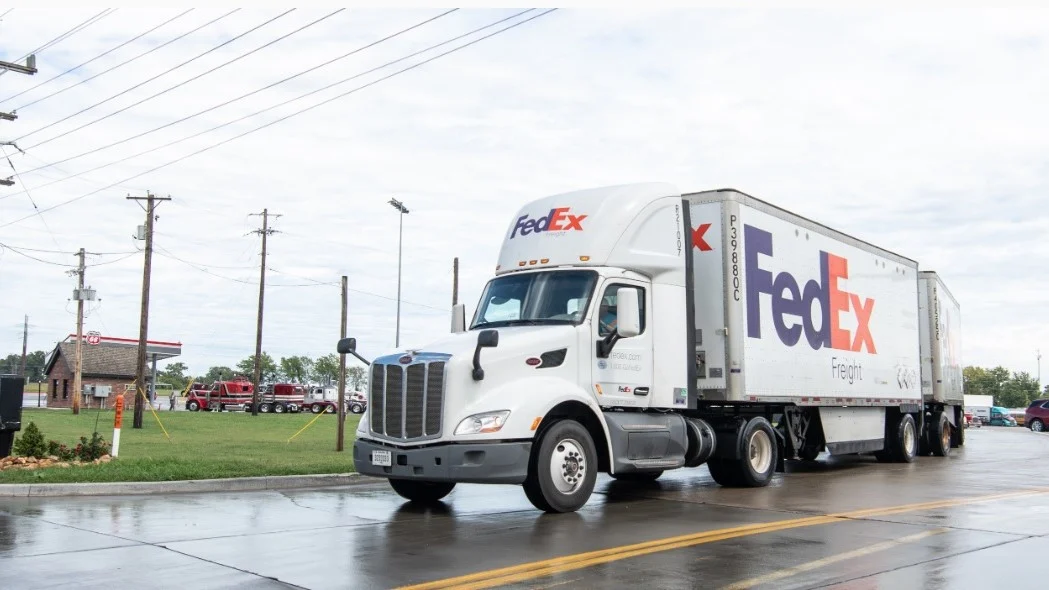
In a landmark decision that promises to reshape the landscape of the North American logistics industry, FedEx Corp. (NYSE: FDX) has officially announced the formal approval of the spinoff of its less-than-truckload (LTL) powerhouse, FedEx Freight. The Memphis-based logistics titan, which has spent decades building an integrated global network, is now pivoting toward a leaner, more focused corporate structure. With the board of directors giving the final green light, the separation is scheduled to conclude by June 1, marking the end of a long-standing unified identity for the freight unit.
The move represents a major strategic shift for FedEx, which seeks to decouple its capital-intensive, specialized freight operations from its broader express and ground networks. By creating a standalone, publicly traded entity for its LTL business, FedEx aims to unlock shareholder value and provide investors with a targeted vehicle for exposure to the highly specialized freight sector.
The Mechanics of the Separation
Under the approved separation plan, FedEx will execute a pro rata distribution of 80.1% of FedEx Freight’s outstanding common stock to its shareholders. The transaction is designed to be tax-free for U.S. federal income tax purposes, providing a significant benefit to existing investors.
For shareholders of record as of the upcoming Friday, the distribution will be straightforward: for every two shares of FedEx common stock held, investors will receive one share of the newly minted standalone company. FedEx will retain a 19.9% stake in the entity, a position it intends to liquidate within 24 months. Management has signaled that the proceeds from the eventual disposal of this remaining stake will likely be deployed toward debt repayment or returned to shareholders through dividend distributions, further signaling the company’s commitment to capital discipline.
Following the June 1 completion date, FedEx Freight will begin trading on the New York Stock Exchange under the ticker symbol "FDXF," while the legacy FedEx organization will continue to trade under the familiar "FDX" symbol.
A Legacy of Growth: The Chronology of FedEx Freight
To understand the magnitude of this spinoff, one must look at the historical architecture of FedEx Freight. The segment was not an overnight creation but the result of a deliberate, multi-decade "buy and build" strategy that turned FedEx into the nation’s largest LTL carrier.
1998–2006: The Foundation Years
FedEx’s formal entry into the LTL market began in 1998 with the acquisition of Viking Freight. This strategic purchase provided the foundation upon which FedEx would build a national footprint. The company followed this up in 2001 with the acquisition of American Freightways, significantly expanding its reach into new regional markets. In 2006, the acquisition of Watkins Motor Lines provided the crucial "national" component, giving FedEx the capability to handle long-haul, cross-country freight shipments that were distinct from its existing regional networks.
2011: The Unification Strategy
By 2011, the company faced the challenge of integrating these disparate regional and national assets. It successfully merged the national (Watkins) and regional (Viking and American Freightways) operations into a single, cohesive network. This unification allowed the company to offer a more robust suite of services, balancing "priority" shipments for time-sensitive cargo and "economy" services for cost-conscious shippers.
2024–2025: The Strategic Decoupling
The lead-up to the current spinoff has been defined by a focus on "network optimization." Over the last few years, FedEx has aggressively pursued a "One FedEx" strategy to streamline operations. However, the complexity of managing an integrated LTL, express, and ground model under one roof led management to conclude that the freight unit—a distinct operational animal compared to time-definite parcel delivery—would thrive better as an independent, focused business.
Supporting Data: The Scale of the New Entity
FedEx Freight is not a small subsidiary; it is an industrial titan in its own right. With roughly $9 billion in annual revenue, it maintains a footprint that would make it a Fortune 500 company on its own.
The operational scale of the business includes:
- Workforce: 40,000 employees.
- Infrastructure: 365 terminals with a total of 26,000 doors.
- Fleet: A massive logistics footprint comprising 30,000 vehicles, including 17,000 tractors.
This scale provides the new FDXF entity with an immediate competitive moat. As the nation’s largest LTL carrier, the company will enter the public markets with an established customer base, deep operational expertise, and a comprehensive terminal network that is difficult for new entrants to replicate.
Official Perspectives and Leadership Transitions
The leadership transition reflects the continuity and strategic vision behind the move. Brad Martin, the executive chairman of FedEx’s board, will serve as the incoming chairman of the board for the newly independent FedEx Freight.
"Today’s announcement is an important step as we prepare for a seamless separation of the FedEx Freight business on June 1," Martin stated in a press release. "As separate organizations, FedEx and FedEx Freight will build on their respective industry leadership positions to serve customers with excellence, while creating value for their stockholders."
The appointment of Martin as the bridge between the two organizations suggests a desire to maintain institutional knowledge while allowing the freight division the agility to pivot its operational focus. The goal, according to company statements, is to allow the legacy FedEx business—which has been undergoing a massive transformation strategy to reduce overhead and improve efficiency—to focus on its core express and ground synergies without the distraction of the distinct regulatory and operational requirements of the LTL sector.
The Strategic Implications: Why Now?
The decision to spin off FedEx Freight comes at a critical juncture for the global supply chain. Logistics companies are facing mounting pressure from the rise of e-commerce, the need for green energy transitions, and the persistent threat of cyber-attacks and freight fraud.
Targeted Investor Exposure
By separating the units, FedEx is essentially allowing investors to "vote with their portfolios." Those who believe in the recovery and optimization of the core parcel delivery network can maintain their exposure to FDX, while investors looking for a pure-play, high-barrier-to-entry LTL carrier can focus on FDXF. This decoupling often leads to higher valuation multiples, as analysts can more accurately model the performance of each distinct business model.
Operational Agility
The LTL market is characterized by different service levels, pricing dynamics, and labor requirements than the parcel delivery market. FedEx Freight operates on a terminal-to-terminal basis, whereas the express/ground business is focused on high-velocity residential and commercial last-mile delivery. By operating independently, the new FDXF management team can focus entirely on optimizing freight density and lane profitability without having to balance the needs of the smaller, more volatile parcel delivery segments.
Navigating Industry Headwinds
The logistics industry is currently facing an "existential threat" regarding security. As noted in industry forums and upcoming symposia, issues such as double brokering, AI-driven deepfakes targeting cargo manifests, and sophisticated identity theft are forcing firms to invest heavily in security and technology. A leaner, focused FDXF will be better equipped to allocate its capital directly toward freight-specific security and technology upgrades, rather than competing for budget priority against the global parcel delivery network.
Looking Ahead: The Future of the Industry
The separation of FedEx Freight is part of a broader trend of "corporate unbundling" seen across the industrial and transportation sectors. As companies look to simplify their operations to navigate a more complex global economy, the days of the sprawling, all-encompassing logistics conglomerate are being challenged.
For shippers and industry observers, the next several months will be critical. The transition period will require significant coordination to ensure that the "seamless" separation promised by management is realized. Customers will be looking to see if the quality of service remains high during the corporate restructuring.
Furthermore, as the industry gathers at events such as the Freight Fraud Symposium in Cleveland or the Supply Chain AI Symposium in Chicago, the topic of this spinoff will likely be a primary focal point. Leaders will be discussing how such large-scale structural changes influence the broader supply chain ecosystem—from rail policy to the integration of artificial intelligence in freight management.
As June 1 approaches, all eyes will be on Memphis. For FedEx, this is not just a corporate reorganization; it is a calculated bet that in the modern era of logistics, specialization is the key to longevity. By shedding the weight of its freight unit, the legacy FedEx hopes to move faster, while the new FDXF aims to prove that as a focused entity, it can dominate the LTL market with unprecedented efficiency and scale.