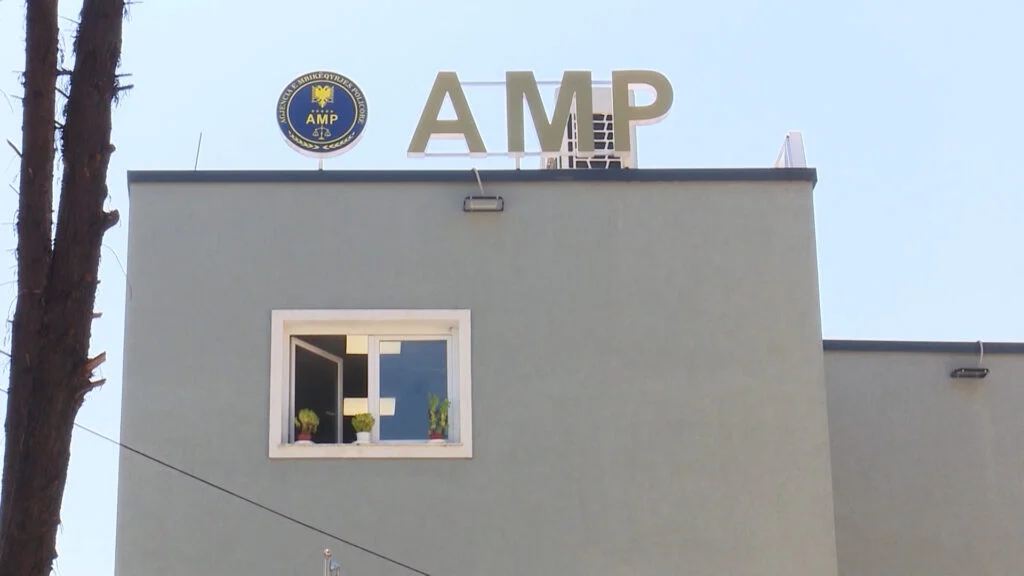
Tirana, Albania – The integrity of Albania’s law enforcement system has once again been cast into the spotlight following the referral of two State Police officers to the Tirana Prosecutor’s Office. The Police Surveillance Agency (AMP), the independent body tasked with overseeing police conduct, announced that it has forwarded procedural materials against K.M. and S.K., both serving at Police Station No. 4, on suspicion of "Abuse of Duty," a criminal offense outlined in Article 248 of the Albanian Penal Code. This serious accusation stems from an investigation into alleged illegal construction activity, highlighting persistent challenges with corruption and oversight within crucial state institutions.
The case, which originated from a media report, centers on a multi-story building in Tirana suspected of having additional floors constructed without proper authorization. The AMP’s findings suggest that official verifications confirmed the structure significantly exceeded its approved building permit, surpassing a critical legal threshold that could trigger public interest confiscation. This development underscores the vigilance required to ensure accountability within the police ranks and the broader struggle against illegal construction and corruption in Albania.
The Genesis of the Investigation: Uncovering Irregularities
The AMP’s proactive intervention was triggered by a report published in electronic media, which brought to light serious allegations concerning a construction project on "Llukë Kacaj" street within Administrative Unit No. 4 in Tirana. The media report specifically claimed that a multi-story building under construction had illegally added two residential floors beyond the scope of the permit initially approved by the Municipality of Tirana. Such reports, often the first line of defense against clandestine activities, play a vital role in prompting official investigations and upholding transparency.
Upon receiving these troubling allegations, the Police Surveillance Agency, acting within its mandate to investigate criminal offenses committed by police officers, launched a preliminary inquiry. The gravity of the claims, particularly concerning potential dereliction of duty or complicity by law enforcement personnel, necessitated swift and thorough action. The initial phase involved collecting information, cross-referencing public records, and establishing the veracity of the media’s claims regarding the construction site.
Key Figures Under Investigation: Specialists in Crime
The two police officers implicated in this ongoing criminal proceeding are K. M. and S. K. Both hold positions related to crime investigation at Police Station No. 4, a district within the sprawling capital city of Tirana. K. M. serves as an Assistant Specialist for Crime Investigation, while S. K. holds the title of Specialist for Crime Investigation. Their roles inherently involve upholding the law, investigating criminal activities, and ensuring public order. The accusation of "Abuse of Duty" against officers specifically tasked with crime investigation raises significant questions about their conduct and potential failure to act, or worse, active participation in shielding illegal activities.
Their positions imply a certain level of responsibility and awareness regarding local law enforcement and potential criminal enterprises within their jurisdiction. The fact that they are specialists in crime investigation means they are expected to possess a keen understanding of legal frameworks and the procedures for addressing illegal acts, including those related to construction. The allegations suggest a profound breach of this professional trust and a potential subversion of their sworn duties.
The Allegation: Abuse of Duty Under Article 248
The core of the accusation against K. M. and S. K. is the criminal offense of "Abuse of Duty," as stipulated by Article 248 of the Albanian Penal Code. This article broadly targets public officials who, by abusing their position or failing to fulfill their duties, cause unlawful damage to the legitimate interests of the state, citizens, or legal entities, or create an unlawful advantage for themselves or others.
In the context of this case, "Abuse of Duty" could manifest in several ways:
- Failure to Act: The officers may have been aware of the illegal construction but failed to take appropriate investigative or administrative actions as required by their roles.
- Obstruction: They might have actively obstructed investigations into the illegal construction or interfered with the duties of other responsible state bodies.
- Facilitation: While less explicitly stated, "Abuse of Duty" could also encompass facilitating the illegal construction, perhaps by providing protection, ignoring complaints, or withholding information from relevant authorities.
The penalties for "Abuse of Duty" in Albania can range from fines to imprisonment, depending on the severity of the damage caused and the specific circumstances of the offense. The referral to the Prosecutor’s Office signifies that the AMP believes there is sufficient preliminary evidence to warrant a full criminal investigation, potentially leading to formal charges and a trial.
Chronology of Events: From Media Report to Prosecutorial Referral
The timeline of events leading to the current situation provides a clearer picture of how the case unfolded:
1. Media Publication (Initial Spark): The investigation began following an electronic media report. While the exact date of publication is not specified, its content highlighted the alleged illegal additions to a multi-story building on "Llukë Kacaj" street. This journalistic initiative served as the crucial catalyst, drawing public attention and prompting official action.
2. AMP’s Initial Assessment: Upon becoming aware of the media report, the Police Surveillance Agency, in line with its mandate to ensure the legality and integrity of police actions, initiated an initial assessment to determine the credibility and gravity of the allegations. This preliminary step is crucial for deciding whether a full investigation is warranted.
3. State Police Verifications (Factual Confirmation): Following AMP’s initial assessment, verifications were reportedly carried out by structures of the State Police itself. This step is critical as it involves on-the-ground checks and technical assessments to confirm the physical existence and extent of the alleged illegal construction. These verifications confirmed that the building had indeed been constructed in excess of its permit, specifically exceeding the legal threshold.
4. AMP’s Formal Investigation (Evidence Collection): With the factual basis established, the AMP, specifically its Tirana Regional Directorate, escalated its involvement. This phase involved more in-depth investigative actions, including:
- Administration of Documentary Evidence: Collecting all relevant official documents, such as building permits issued by the Municipality of Tirana, architectural plans, inspection reports, and any prior complaints or official correspondence related to the construction.
- Taking Statements: Gathering declarations from various relevant police structures and potentially other involved parties to understand the chain of command, knowledge, and actions (or inactions) concerning the illegal construction. This would aim to establish who knew what, when, and what steps were (or were not) taken.
5. Referral to the Prosecutor’s Office (Legal Action): Upon concluding these preliminary investigative actions, and determining that sufficient evidence of potential criminal conduct existed, the AMP decided to refer the case to the Tirana Prosecutor’s Office. This referral marks a significant procedural step, transitioning the matter from an internal police oversight investigation to a full-fledged criminal investigation under the purview of the public prosecutor.
6. Ongoing Investigations: The official statement indicates that investigations are continuing for the full documentation of the circumstances of the case. This means the Prosecutor’s Office will now conduct its own in-depth investigation, potentially involving further evidence collection, witness interviews, expert testimonies, and eventually deciding whether to press formal charges against the implicated officers.
Supporting Data and Legal Framework: The 10% Threshold and Normative Act
A critical piece of information emerging from the AMP’s findings is that the building exceeded its construction permit beyond a "legal threshold of 10%." This threshold is significant because it is directly linked to the measure of confiscation for public interest, as referenced by Normative Act No. 8, dated 01.10.2025.
The 10% Threshold:
In many jurisdictions, including Albania, minor deviations from approved construction permits might be tolerated or subject to administrative fines and regularization procedures. However, exceeding the permit by a substantial margin, such as 10% or more, often moves the violation into a different category, implying a more deliberate and significant breach of planning regulations. This threshold indicates that the excess construction is not merely a minor oversight but a substantial deviation that fundamentally alters the approved project. Such a large deviation often requires a different legal response, including potentially the demolition of the illegal parts or, as in this case, even confiscation.
Normative Act No. 8, dated 01.10.2025:
The reference to "Normative Act No. 8, dated 01.10.2025" presents a peculiar detail due to its future date. It is highly probable that this is a typographical error in the original article, and the intended date refers to an existing or recently enacted normative act (e.g., 2015 or 2023) that addresses illegal constructions and the criteria for confiscation in the public interest. Assuming this is a clerical error and refers to an active legal framework, this act would define:
- Criteria for Illegal Construction: What constitutes an illegal construction, particularly regarding deviations from permits.
- Thresholds for Intervention: The specific percentage (like the 10% mentioned) beyond which an administrative violation becomes a more serious legal offense, triggering stronger measures.
- Confiscation for Public Interest: The legal basis and procedures for the state to confiscate properties or parts of properties built illegally, especially when the deviation is substantial and cannot be easily legalized or regularized. This measure is typically reserved for severe breaches, acting as a powerful deterrent and a means for the state to reclaim unlawfully exploited public resources or spaces.
The involvement of police officers in a case where a building significantly exceeds its permit, touching upon this 10% threshold and the potential for confiscation, suggests that their "Abuse of Duty" might be directly related to their failure to intervene, report, or even actively facilitate such a blatant violation of construction law. Police are often the first responders or local authorities who would observe such large-scale illegalities, and their inaction or complicity would be a serious breach of public trust.
Official Responses and Institutional Mandates
While the article does not provide direct quotes from officials, the actions taken speak volumes about the mandates and expected responses of the institutions involved.
The Police Surveillance Agency (AMP):
The AMP’s referral of the case to the Prosecutor’s Office is a clear demonstration of its commitment to its core mission: to combat corruption and abuse of power within the ranks of the Albanian State Police and the Republican Guard. Established as an independent body, the AMP acts as an internal watchdog, ensuring that law enforcement officers operate within the bounds of the law and uphold ethical standards. Its proactive investigation, triggered by media reports, underscores its role in maintaining public trust in the police force. The AMP’s action sends a strong message that no officer, regardless of rank or position, is above the law.
The Tirana Prosecutor’s Office:
Upon receiving the AMP’s referral, the Tirana Prosecutor’s Office assumes responsibility for the criminal investigation. Its mandate is to objectively gather evidence, interview witnesses, consult experts, and determine whether there is sufficient legal basis to formally charge the implicated officers. If charges are pressed, the Prosecutor’s Office will then represent the state in court, seeking justice and upholding the rule of law. Their involvement signifies the transition from an administrative or internal police investigation to a full-fledged criminal prosecution.
The Municipality of Tirana:
The Municipality of Tirana plays a crucial role in the initial stages of construction projects, as it is responsible for issuing building permits and conducting oversight. Any deviation from an approved permit, especially one of this magnitude, would inherently point to a failure in the municipal inspection and enforcement mechanisms. While the police officers are the direct subjects of this investigation, the broader context inevitably involves the effectiveness of municipal regulatory bodies like IKMT (National Inspectorate of Territorial Protection) and local urban planning offices.
The State Police:
Internally, the State Police is expected to cooperate fully with the AMP and the Prosecutor’s Office in such investigations. This includes providing access to relevant information, facilitating interviews with personnel, and potentially initiating internal disciplinary proceedings against the officers, independent of the criminal investigation. The integrity of the State Police as an institution depends on its willingness to self-cleanse and hold its members accountable for misconduct.
Broader Implications: Trust, Corruption, and the Rule of Law
This case carries significant implications that extend far beyond the two individuals under investigation, touching upon systemic issues within Albania’s governance and law enforcement.
Erosion of Public Trust:
When police officers, who are entrusted with upholding the law and protecting citizens, are themselves accused of abusing their power, it severely erodes public trust in law enforcement institutions. Such incidents foster cynicism and undermine efforts to build a society where citizens feel safe and confident in the justice system. For a nation striving for European integration, maintaining a high standard of integrity within its police force is paramount.
The Fight Against Corruption:
Albania has long grappled with the pervasive issue of corruption, particularly in sectors prone to high profits, such as construction and urban development. This case highlights how corruption can permeate various levels of state administration, including law enforcement. The alleged "Abuse of Duty" by crime investigation specialists in connection with illegal construction could be indicative of a broader network of illicit activities, where officials turn a blind eye or actively facilitate illegal ventures for personal gain. The AMP’s intervention is a positive signal in the ongoing national fight against corruption, demonstrating that no sector or official is immune from scrutiny.
Upholding the Rule of Law:
The principle of the rule of law dictates that everyone, including those in positions of power, must be subject to the law. This investigation is a test of Albania’s commitment to this principle. Successfully prosecuting officers found guilty of abuse of duty sends a powerful message that accountability is enforced, regardless of one’s official capacity. It reinforces the idea that justice is impartial and that institutions are capable of self-correction.
Consequences for the Construction Sector:
The construction industry in Albania has been a significant driver of economic growth but has also been plagued by allegations of informal practices, illegal additions, and questionable permitting processes. Cases like this one could serve as a deterrent, signaling to developers and builders that illegal practices will face stricter enforcement and that complicity from state officials will be exposed and punished. This could lead to a more regulated and transparent construction environment, ultimately benefiting urban planning and citizen safety.
Setting a Precedent:
The outcome of this case could set an important precedent for future investigations into misconduct by law enforcement officers and irregularities in the construction sector. A robust and transparent legal process, culminating in appropriate judgments, can strengthen the legal framework and bolster public confidence in the state’s capacity to address complex issues of corruption and abuse of power.
Next Steps in the Legal Process
The referral to the Prosecutor’s Office marks the beginning of the formal criminal investigation phase. The next steps will likely include:
- In-depth Investigation by the Prosecutor: The prosecutor will review the AMP’s materials, conduct additional interviews, potentially order forensic audits or expert evaluations of the construction, and gather any further evidence deemed necessary.
- Formal Charges (If Applicable): If the prosecutor finds sufficient evidence, formal charges will be filed against K. M. and S. K.
- Pre-trial Procedures: This could involve interrogations, presentation of evidence to a judge, and potentially detention or other restrictive measures depending on the severity of the charges and flight risk.
- Trial: If the case proceeds to trial, both the prosecution and the defense will present their arguments and evidence before a court.
- Verdict and Sentencing: If found guilty, the officers will face penalties as prescribed by Article 248 of the Penal Code.
The full documentation of the circumstances of this case remains crucial. The public will be watching closely as the legal process unfolds, hoping for a resolution that reinforces integrity within Albania’s state institutions and strengthens the rule of law. This incident serves as a stark reminder of the continuous effort required to combat corruption and ensure that those sworn to uphold the law are themselves held to the highest standards of conduct.