In a landmark development for the digital asset sector, Singapore-based stablecoin infrastructure powerhouse StraitsX has announced a strategic partnership with global payments titan Visa. Revealed on 15 October 2026, the collaboration aims to propel StraitsX’s stablecoin-backed card issuing capabilities into more than 100 markets worldwide. This move represents a decisive evolution for the firm, which has already cemented a formidable presence in the Asian financial technology landscape.
By integrating stablecoin payment flows directly into Visa’s ubiquitous acceptance network, the partnership seeks to solve the “last mile” problem of cryptocurrency adoption: the ability for consumers to spend digital assets at the point of sale without requiring merchants to overhaul their existing payment infrastructure.
The Core Facts: Bridging the Digital-Fiat Divide
The partnership is built upon the foundation of StraitsX’s robust performance in Asia, where its stablecoin-backed card programs have achieved an annualised gross transaction volume (GTV) exceeding US$6 billion. This impressive metric serves as proof-of-concept for the firm’s technology, demonstrating that stablecoins are increasingly moving beyond speculative trading assets to become viable instruments for everyday commerce.
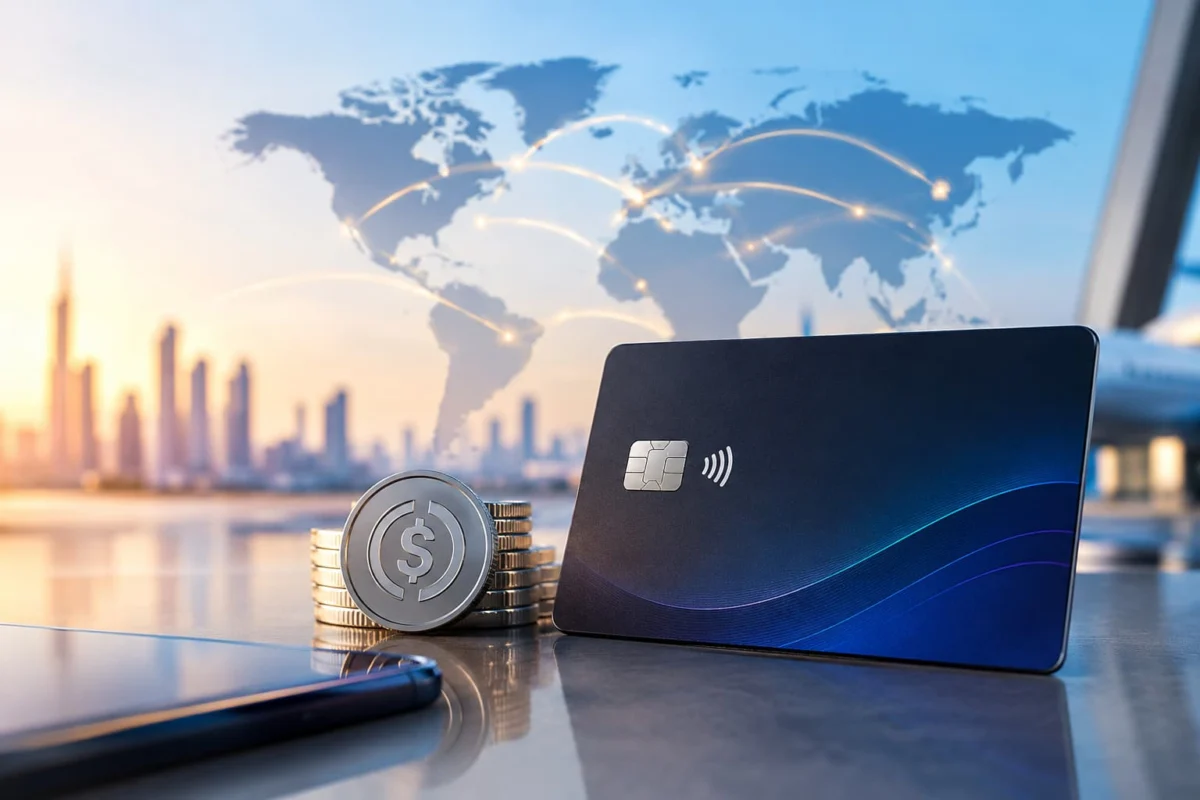
Under the terms of the agreement, StraitsX will provide the technical infrastructure for fintechs, Digital Payment Token (DPT) service providers, and digital wallet operators to issue Visa-branded cards linked to stablecoin balances. Crucially, the solution allows users to spend stablecoins—such as the company’s native XUSD and XSGD—while merchants receive traditional fiat currency, seamlessly settled through Visa’s global rails.
This expansion, however, remains subject to the complex web of global regulatory oversight. The initiative is contingent upon meeting applicable local compliance, licensing, and Visa-specific requirements in each of the 100-plus target markets.
A Chronology of Progress: From Singapore to the World
The journey toward this global partnership reflects the measured, regulatory-first approach that has become the hallmark of StraitsX.
- Foundation and Licensing: StraitsX established its credibility by securing a Major Payment Institution license from the Monetary Authority of Singapore (MAS). This regulatory stamp of approval has been essential in building trust with institutional partners.
- Regional Dominance: Over the past few years, StraitsX focused its efforts on the Asian market, perfecting its settlement-layer technology. By building a card business that successfully processed over US$6 billion in annualised volume, the firm demonstrated the scalability of its infrastructure.
- The October 2026 Milestone: The formal announcement of the Visa partnership on 15 October 2026 marks the firm’s transition from a regional specialist to a global player.
- Future Outlook: The coming months will be defined by the phased rollout of card programs in non-Asian jurisdictions, contingent on acquiring the necessary licenses to operate in regions like the European Union and the Middle East.
Supporting Data: Why the Model Works
The success of the StraitsX-Visa partnership is not merely speculative; it is rooted in the practical utility of stablecoins as a settlement layer.
The Power of Distribution
The structural genius of this model lies in bypassing the need for merchant adoption. Traditionally, for a merchant to accept a stablecoin directly, they would need to integrate new wallet software or payment gateways. By sitting inside the Visa network, StraitsX enables stablecoin usage at any of the tens of millions of locations that already accept Visa.
Transactional Velocity
With US$6 billion in annualised GTV, StraitsX has proven that it can handle high-frequency, low-latency transactions. This volume provides the necessary liquidity and security for Visa to trust the integration. It validates the hypothesis that consumers are seeking ways to utilize their digital holdings for daily expenses—ranging from coffee purchases to cross-border remittances—without the volatility or friction associated with non-pegged cryptocurrencies.
Official Perspectives: Bridging Two Worlds
The collaboration has drawn significant attention from leadership at both organizations, highlighting a shared vision for the future of payments.
Tianwei Liu, Chief Executive and Co-Founder of StraitsX, emphasized the strategic importance of this transition. “The growth of stablecoin-backed cards in Asia has demonstrated a practical path from settlement-layer use case to everyday payments,” Liu stated. He noted that the goal is to replicate this success globally, providing businesses with the infrastructure necessary to scale card programs across diverse regulatory environments.
Rubail Birwadker, Global Head of Growth Products and Partnerships at Visa, underscored the technical synergy of the deal. According to Birwadker, the collaboration is about “connecting stablecoin payment flows to the scale and reliability of Visa’s global network.” This statement highlights Visa’s broader commitment to integrating digital assets, positioning itself not as an adversary to crypto, but as the essential conduit through which it becomes usable in the mainstream economy.

Implications: The Global Regulatory Landscape
While the technological potential is vast, the expansion into 100-plus markets brings significant regulatory challenges. The landscape for stablecoins is fragmented and increasingly stringent.
The Compliance Hurdle
StraitsX must navigate a myriad of new licensing frameworks:
- European Union: The implementation of the Markets in Crypto-Assets (MiCA) regulation has set a high bar for electronic money tokens, requiring stringent capital reserves and transparency.
- The Middle East: Jurisdictions such as the UAE’s Virtual Assets Regulatory Authority (VARA) and the Abu Dhabi Global Market (ADGM) have established specialized regimes for stablecoins.
StraitsX’s ability to enter these markets depends on its agility in satisfying these local authorities. The partnership’s caveat regarding "applicable regulatory approvals" is a nod to the fact that technical readiness is only half the battle; political and legal alignment is the other.
AML and CFT Risks
The cross-border nature of the product presents significant Anti-Money Laundering (AML) and Counter-Terrorist Financing (CTF) risks. The partnership must account for varying regulatory standards across continents. Integrating AML/CTF protocols into the stablecoin-to-card pipeline is a non-trivial task that requires robust, automated compliance tools to ensure that every transaction complies with local jurisdictional requirements without sacrificing user experience.
Competitive Positioning: The Race for Infrastructure
StraitsX is not acting in a vacuum. The race to dominate stablecoin-card infrastructure is intensifying. Several US, European, and Southeast Asian firms are vying for the same market share.
Visa itself has been a long-time participant in the space, conducting various stablecoin settlement pilots. The competitive advantage for StraitsX lies in its Asian-rooted track record. Having operated under the rigorous supervision of the MAS, StraitsX brings a level of institutional-grade compliance that may prove highly attractive to fintech clients looking for stability in an often volatile market.
The key question for the next fiscal year will be whether StraitsX can successfully translate its Asian GTV growth into a global success story. If it can maintain its high standards of security and compliance while expanding its geographic footprint, the firm could become the de facto infrastructure provider for the next generation of digital-asset-native fintechs.
Conclusion: The Road Ahead
The partnership between StraitsX and Visa is a defining moment for the stablecoin industry. It represents a maturation of the sector, moving away from niche, isolated use cases and toward full integration with the legacy financial system.
Investors and industry observers will be watching three primary indicators in the coming months:
- Market Expansion: The specific list of non-Asian countries where card programs are successfully launched.
- Licensing Milestones: Any additional stablecoin-specific licenses the firm manages to secure in the EU or the Middle East.
- Volume Growth: Whether the US$6 billion GTV figure experiences an acceleration as global issuance begins to take hold.
By effectively bridging the gap between stablecoin innovation and the reliability of the Visa network, StraitsX is not just building a product—it is building the plumbing for the future of money. In an era where digital assets are no longer fringe, this partnership signals that the convergence of crypto and traditional finance is not just coming; it is already here, processed in milliseconds at the checkout counter.
AI level 1 of 5: written by Darlyn Ho; AI helped with tone, structure, and wording; edited and signed off by Mark Walker, Editorial Director.