By Mark Segal | October 26, 2026
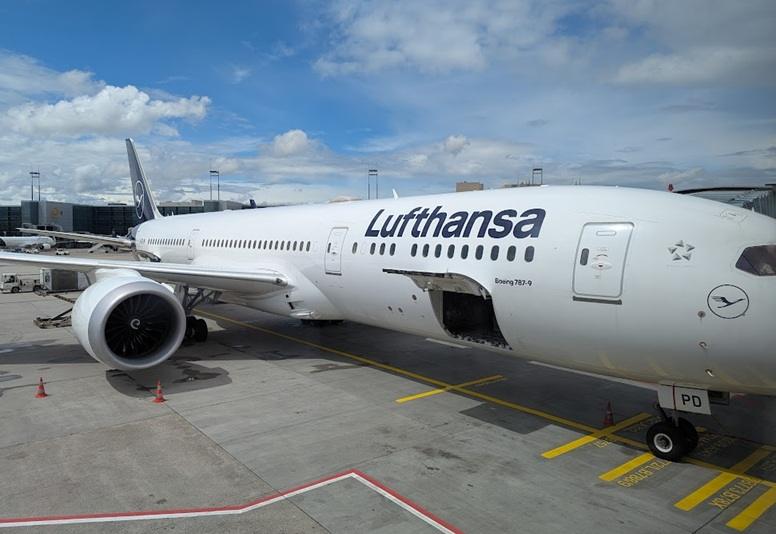
In a significant shift reflecting the increasingly rigorous landscape of corporate sustainability communication, the Lufthansa Group has officially announced the rebranding of its “Green Fare” product to “Impact Fare.” This strategic pivot, while seemingly subtle in nomenclature, underscores a broader, industry-wide reckoning with regulators regarding how environmental claims are marketed to consumers. As the European Union moves to enforce strict new directives against greenwashing, major corporations are being forced to trade aspirational branding for more precise, defensible language.
The Core Transformation: From ‘Green’ to ‘Impact’
The “Green Fare,” introduced by the Lufthansa Group in 2023, was designed as a value-added service for passengers seeking to mitigate the carbon footprint of their air travel. Under the original program, travelers paid a premium that the airline channeled into a two-pronged strategy: the purchase of Sustainable Aviation Fuel (SAF) and investment in climate protection projects.
For European flights, the fare accounted for 20% of the flight’s estimated emissions through SAF, while intercontinental routes covered 10%. The remaining emissions were mitigated through external climate protection initiatives—ranging from reforestation efforts to innovative direct air capture (DAC) technologies—designed to remove CO2 from the atmosphere.
By rebranding this as the “Impact Fare,” Lufthansa is attempting to shift the narrative from a vague, potentially misleading promise of “green” travel to a more transparent emphasis on the quantifiable contribution the passenger makes toward aviation’s sustainability transition. According to company officials, the new branding is intended to place “even stronger emphasis on customers’ contribution to greater sustainability in aviation,” rather than implying the flight itself is carbon-neutral or inherently environmentally friendly.
A Chronology of Regulatory Pressure
The transition is not an isolated corporate decision but the direct result of a multi-year effort by European regulators to curb misleading environmental marketing.
- 2023: Lufthansa launches the “Green Fare” across its network, marking a bold entry into the voluntary carbon contribution market.
- Early 2024: Following a series of complaints filed by the European Consumer Organisation (BEUC), the European Commission launches a sweeping investigation into the marketing practices of various European airlines. The primary allegation: consumers were being misled into believing that paying a “green fee” rendered their flight sustainable.
- Late 2025: Facing mounting pressure from national consumer authorities, Lufthansa and several other European carriers reach a landmark agreement with the European Commission. The airlines commit to phasing out claims that imply flight sustainability can be achieved through carbon offsetting or SAF usage, and in some cases, are pressured to provide clarity or restitution regarding past marketing.
- Mid-2026: The EU’s Directive on Empowering Consumers for the Green Transition (ECGT) officially enters into force. The Directive introduces stringent requirements, effectively banning generic environmental claims—such as “environmentally friendly,” “eco-friendly,” or “biodegradable”—that cannot be substantiated with comprehensive, life-cycle proof.
- October 2026: Lufthansa confirms the transition to “Impact Fare,” acknowledging that the change is driven by “new regulatory requirements for environmental communication.”
The Regulatory Landscape: The EU’s Green Transition Directive
The shift in Lufthansa’s branding is a bellwether for the aviation industry and beyond. The Directive on Empowering Consumers for the Green Transition (ECGT) represents one of the most aggressive legislative efforts in the world to combat corporate greenwashing. By prohibiting unsubstantiated, vague, and deceptive claims, the EU is effectively raising the barrier to entry for green marketing.
For an airline, calling a fare “green” is now high-risk behavior. Under the new Directive, such a claim must be backed by a standard of excellence that is nearly impossible to reach in an industry as carbon-intensive as aviation. By choosing the word “Impact,” Lufthansa is opting for a term that describes an action—a contribution toward a goal—rather than a state of being. This linguistic shift provides a legal buffer, as it frames the fare as a mechanism for change rather than a promise of environmental neutrality.
Industry Implications: Beyond the Airline Sector
Lufthansa is not the only giant feeling the squeeze. The trend of corporate re-evaluation is currently sweeping through the European consumer goods market. Only last week, the European Commission announced that it had secured agreements with consumer staples giants including Coca-Cola, Nestlé, and Danone. These companies have agreed to overhaul the recycling claims featured on their plastic bottle packaging, as current messaging was found to be potentially misleading under the new EU guidelines.
This wave of adjustments suggests that the "Greenwashing Era" of the early 2020s is drawing to a close. Companies are now operating in a "Verification Era," where sustainability departments are increasingly working in lockstep with legal and compliance teams to ensure that every word in an advertisement can withstand regulatory scrutiny.

Supporting Data: The Scale of the Program
Despite the change in name, the functional utility of the program remains a significant part of the Lufthansa Group’s sustainability strategy. To date, the group reports that over 5 million passengers have opted for the fare. This figure is critical for the airline’s broader goals; it demonstrates a quantifiable appetite among the traveling public for voluntary carbon contributions.
The program’s reliance on SAF is particularly important. While critics often argue that carbon offsetting is a "license to pollute," SAF represents a technological pathway to actually reducing emissions at the source. By channeling millions of passenger contributions into the SAF market, Lufthansa is helping to scale a nascent industry that is currently hampered by high costs and limited production capacity. The rebranding to “Impact Fare” does not diminish this role; rather, it formalizes the relationship between the consumer and the airline’s sustainability R&D.
Official Responses and Strategic Messaging
In its official communication, the Lufthansa Group remained focused on the evolution of the brand. By framing the transition as a move toward "stronger emphasis on customers’ contributions," the company is attempting to maintain brand loyalty while simultaneously appearing cooperative with the European Commission.
The airline’s statement highlights that the core offering remains unchanged: the financial support for decarbonization technologies. However, the decision to avoid naming the specific regulations behind the change suggests a degree of discomfort with the external pressure. By not explicitly naming the ECGT, the company manages to distance itself from the perception that it was "caught" or "forced," instead portraying the change as a proactive, consumer-focused enhancement.
Future Outlook: What Does ‘Impact’ Mean for the Consumer?
As the industry moves forward, the success of the “Impact Fare” will depend on whether consumers perceive the value of their contribution as truly impactful. Transparency will be the next major battleground. If regulators are no longer allowing airlines to use the word "green," they will soon demand that companies provide rigorous, audit-ready data on how that "impact" is measured.

For travelers, this may mean more detailed receipts or digital dashboards showing exactly where their money went: how many liters of SAF were purchased, which specific reforestation projects were funded, and what the verified carbon removal metrics of those projects are.
Conclusion
Lufthansa’s transition from “Green Fare” to “Impact Fare” is a microcosm of the current global corporate environment. The age of unverified, feel-good sustainability marketing is being systematically dismantled by European legislation. For firms like Lufthansa, the challenge is now to maintain the narrative of sustainability while operating under the microscope of strict consumer protection laws.
The move serves as a critical lesson for other multinational corporations: regulatory compliance is no longer a check-the-box exercise. It is a fundamental component of brand strategy. As the European Union continues to set the global standard for greenwashing regulation, companies that embrace precision and transparency in their environmental claims will likely be the ones that sustain consumer trust in the long term. For now, Lufthansa is betting that “Impact” is a word that both the regulators and the public can live with—a move that prioritizes the long-term viability of their green initiatives over the short-term appeal of "green" branding.