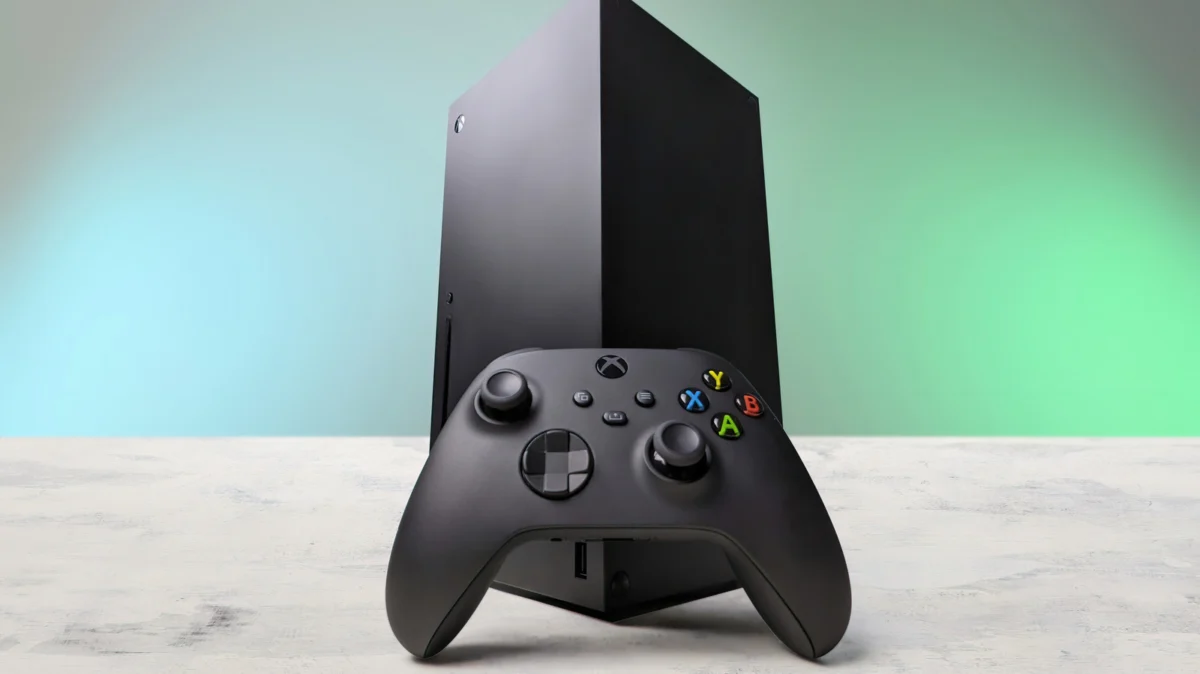
When the Xbox Series X first hit the market in November 2020, it arrived with a disruptive promise: high-end, 4K-capable gaming for the price of $499.99. At the time, PC enthusiasts immediately scrambled to prove they could replicate that performance for a similar budget. The consensus quickly settled on an $800 figure—a target that, while higher than the console, was seen as a reasonable "PC tax" for the added utility of a desktop computer.
Six years later, the landscape of gaming hardware has shifted dramatically. The Xbox Series X now retails for $799.99, following several price hikes attributed to the ongoing components crisis. Yet, as the console grows more expensive, the question of building a "console-killer" PC remains as relevant as ever. Current data suggests that while the gap between console and PC pricing has narrowed, the dream of building a brand-new, Series X-equivalent PC for $800 remains largely a fantasy.
Main Facts: The Economic Reality of 2026
The fundamental challenge of building a PC that mirrors the Series X lies in the "hidden" costs of desktop computing that console gamers rarely consider. A console is a closed ecosystem; you pay the sticker price, and you are ready to play. A PC build requires not just the core components—CPU, GPU, RAM, storage, and motherboard—but also the "infrastructure": the power supply, the chassis, a cooling solution, an operating system license, and the controller itself.
If you are sourcing brand-new parts today to match the Series X’s performance profile, you are looking at a minimum expenditure of approximately $1,200. This estimate accounts for the necessity of Windows 11 Home ($139) and a quality controller ($65), which are bundled into the value proposition of a console. Even if you pivot to the used market, where prices for components like the RTX 3060 Ti or older Ryzen processors have stabilized, you are still looking at a floor of roughly $730 before you even account for the peripherals or the risk associated with second-hand hardware.
A Chronological Perspective: From 2020 to the Present
The trajectory of hardware pricing has been volatile. In 2020, the difference between building a PC and buying a console was roughly $1,060—a staggering premium. Today, that gap has compressed to approximately $415.
This shift is not necessarily because PCs have become significantly cheaper, but because the definition of "competitive hardware" has evolved. In 2020, to match the Series X’s 12-teraflop performance, one needed a premium graphics card like the Nvidia RTX 2080. Today, entry-level to mid-range cards—such as the Intel Arc B580 or various iterations of the RTX 40-series—can achieve similar results at a fraction of the power and cost of 2020-era flagship cards.
However, the "memory apocalypse" has complicated this math. RAM prices have seen a meteoric rise due to AI-driven demand. In 2020, 16GB of RAM was a modest investment of around $64. In 2026, a 32GB DDR4 kit can easily run upwards of $200, while DDR5—the modern standard—carries an even steeper premium. This inflationary pressure on system memory has forced many budget builders to rely on the aging AM4 platform, effectively capping the upgrade path for the sake of immediate affordability.
Supporting Data: Breaking Down the Costs
To build a machine capable of standing toe-to-toe with the Series X, one must understand the specifications. The console utilizes a custom 8-core AMD Zen 2 processor at 3.8GHz, 16GB of shared memory, and a custom 12-teraflop GPU.
The Graphics Card Dilemma
Since the Series X GPU was never sold as a standalone desktop component, we look to benchmarks. In 2020, the console was compared to the RTX 2080. Today, the RTX 3060 Ti or the AMD RX 6700 XT serve as the standard bearers for this performance tier.
- New GPU Pricing: A mid-range card like the Intel Arc B580 or AMD RX 7600 currently retails for between $310 and $330.
- Used Market Pricing: Resale platforms like Jawa show the RTX 3060 Ti averaging $223, while the RTX 2080 can be found for as low as $195.
The Component Bill
When assembling a build around the B580, the costs accumulate quickly:
- CPU (Ryzen 5/7 series): ~$150
- Motherboard: ~$120
- RAM (16GB DDR4): ~$100
- SSD (1TB NVMe): ~$80
- Case & PSU: ~$150
- GPU: ~$330
- OS & Controller: ~$204
- Total: ~$1,134
This total validates the $1,200 ballpark. Even when opting for a budget-focused build using an older Ryzen 7 3700X and a used B450 motherboard, the "savings" are offset by the risks of buying hardware that may have been subjected to heavy crypto-mining or wear.
Official Responses and Market Context
Microsoft’s stance on these pricing fluctuations has been consistent: the "components crisis" remains the primary driver of hardware costs. Memory and storage prices, according to industry reports, have risen more than 2.5 times compared to the launch window of the Series X.
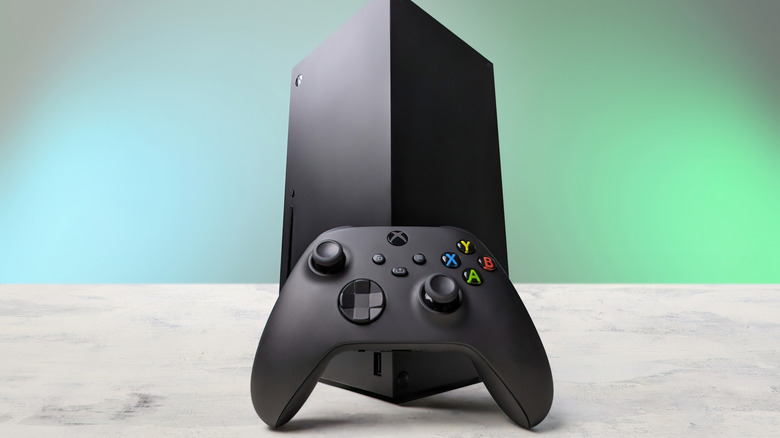
Furthermore, Microsoft’s decision to sell "Certified Refurbished" Series X units for $649.99 provides a major hurdle for the DIY crowd. These units offer the convenience of a 4K Blu-ray drive—a feature absent in almost all custom PC builds at this price point—and guaranteed compatibility with the entire Xbox library. For the consumer who simply wants to play games, the PC build is objectively a worse financial deal.
Implications for the Future of Gaming
The implications of this data are clear: the PC is a tool for productivity and gaming, while the console is a specialized appliance. If your goal is to experience 4K gaming at 60 or 120 FPS, the console remains the most efficient way to spend your money.
However, the industry is approaching a pivot point. Microsoft’s upcoming "Project Helix" console, which promises native PC game compatibility, suggests that the lines between the two platforms are blurring. By 2027, when developers receive the alpha hardware for this new architecture, the distinction between a "gaming PC" and a "console" may become largely semantic.
Valve’s Steam Machine, starting at $1,049, already serves as a precursor to this convergence. It offers a console-like experience with the open nature of the PC platform. For those who insist on building their own machine, the advice remains the same as it was in 2020: build a PC because you need a PC, not because you expect to save money over a console.
Final Verdict: Should You Build?
If you have a budget of $800, you are better served by a new or refurbished Xbox Series X. You get a reliable, high-performance machine with a warranty, a Blu-ray player, and a seamless ecosystem. If you have $1,200 and a desire to engage in video editing, file management, and a vast library of PC-exclusive titles, then the custom build is a compelling investment. But do not be fooled by the nostalgia of 2020—the days of building a high-end gaming machine for the price of a mid-range console are, for the time being, behind us.