The modern desktop computing landscape is undergoing a quiet revolution. For years, the trade-off for adopting a space-saving mini PC was clear: you sacrificed graphical horsepower for a smaller footprint. While integrated graphics have seen significant leaps in performance—thanks to advancements from AMD’s APUs and Intel’s latest integrated solutions—they remain a bottleneck for professional creative workflows, high-end 3D rendering, and enthusiast-grade gaming.
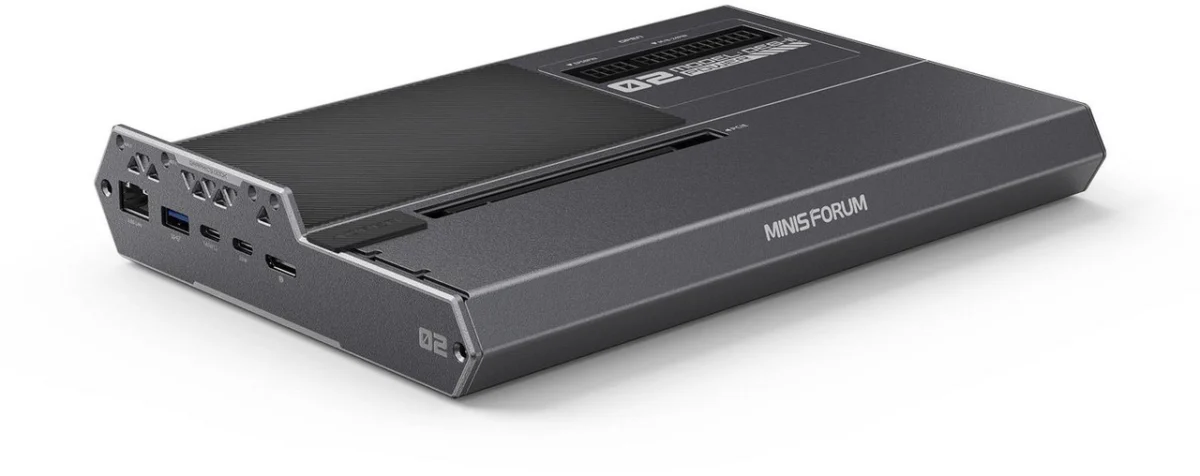
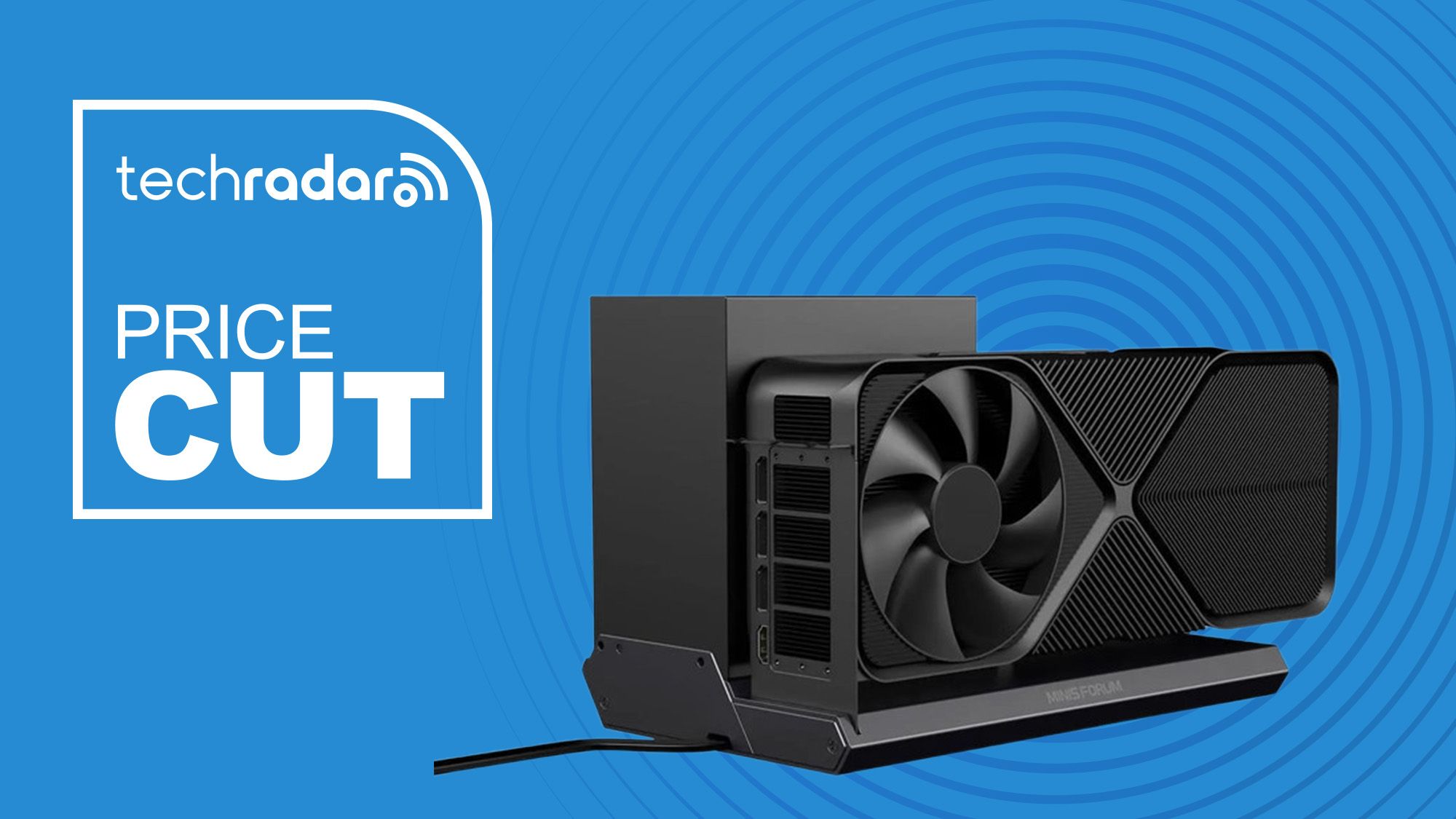
Enter the Minisforum DEG1, an external GPU (eGPU) docking station that promises to bridge the gap between compact form factors and workstation-level performance. Currently priced at $109 at Newegg, this device has become the go-to solution for those looking to transform their humble mini PC into a powerhouse. By leveraging the OCuLink interface, the DEG1 bypasses the bandwidth limitations that have historically plagued external graphics solutions, offering a compelling upgrade path for those who refuse to compromise on size or speed.
The Core Innovation: Moving Beyond Thunderbolt
To understand why the Minisforum DEG1 is making waves, one must first understand the limitations of previous eGPU standards. Historically, most external GPU docks relied on Thunderbolt 3 or 4. While convenient, these protocols are designed for versatility rather than pure throughput. They share bandwidth with other peripherals, often resulting in "overhead" that chokes a high-end graphics card, leading to a performance loss of anywhere from 15% to 30% compared to a desktop install.
The DEG1 sidesteps this entirely by utilizing OCuLink (Optical-Copper Link). By providing a direct PCIe 4.0 x4 connection, the DEG1 offers significantly higher effective bandwidth than USB4 or Thunderbolt. This means that a card installed in the DEG1 performs much closer to its native potential. For users running an Nvidia RTX 4090 or a high-end Radeon card, this is the difference between a stuttering frame rate and a fluid, professional experience.
Chronology: The Rise of the eGPU Dock
The journey to the DEG1 did not happen overnight. The development of external GPU enclosures has been a multi-year effort to solve the "Mini PC dilemma."
- 2016–2019: The Thunderbolt Era. Early eGPU enclosures like the Razer Core series set the stage, proving that users wanted to connect desktop GPUs to laptops. However, high costs and performance bottlenecks made these niche products.
- 2022–2023: The OCuLink Breakthrough. As mini PCs became more popular, manufacturers like Minisforum began integrating OCuLink ports directly onto motherboards. This signaled a shift toward treating eGPUs as a semi-permanent desktop component rather than a temporary laptop accessory.
- 2024: The Launch of the DEG1. Minisforum officially released the DEG1 to address the demand for a minimalist, cost-effective housing for these powerful cards. It was positioned not as a high-end consumer gadget with RGB lighting and proprietary cables, but as a utility-focused "barebones" dock.
- Late 2024: Market Stabilization. Following its initial launch at roughly $90–$100, the DEG1 has stabilized into its current retail pricing. The recent promotional price of $109 at Newegg reflects a market that has matured, making the technology accessible to a broader audience of DIY builders.
Supporting Data: Why Performance Matters
The efficacy of the Minisforum DEG1 is rooted in its PCIe architecture. Unlike docks that rely on complex controllers, the DEG1 is a pass-through device.
Technical Specifications at a Glance:
- Interface: OCuLink (PCIe 4.0 x4)
- Slot: Full-length PCIe x16
- Compatibility: Standard ATX and SFX power supplies
- Build: Open-frame chassis
- Target Audience: Mini PC and Handheld users
When we compare the performance degradation of an OCuLink connection versus Thunderbolt 4, the data is stark. In synthetic benchmarks like 3DMark, OCuLink configurations consistently show a 10–15% performance delta over Thunderbolt, which often struggles with heavy data loads. Because the DEG1 supports full-sized, power-hungry cards like the RTX 4090, it effectively turns a 1-liter mini PC into a machine capable of 4K gaming, AI model training, and heavy-duty 4K video editing.
Official Perspective and Design Philosophy
Minisforum has long been a company that listens to the "tinkerer" demographic. When designing the DEG1, their goal was not to create a sleek, "Apple-esque" external hub, but to provide a robust, reliable, and inexpensive skeleton for a desktop GPU.
By opting for an open-frame design, Minisforum has solved two problems: cooling and cost. Enclosed eGPU docks often suffer from poor thermal management, leading to thermal throttling of the GPU. The DEG1’s open-air architecture allows for maximum airflow, ensuring that even under heavy rendering loads, the GPU remains within its optimal temperature range. Furthermore, by excluding a built-in power supply, the company has kept the price point at an incredibly competitive $109, allowing users to leverage spare power supplies they might already have lying around.
Implications for the Industry
The success of the DEG1 has profound implications for the future of desktop computing. It validates the "Modular PC" concept.
1. The Death of the "All-in-One" Requirement
Consumers no longer need to buy a massive tower to house a massive graphics card. By separating the processing unit (the mini PC) from the rendering unit (the eGPU), users can upgrade their systems piecemeal. If a new generation of GPUs launches, the user only needs to swap the card in the DEG1—the mini PC remains untouched.
2. The Rise of the Handheld Gaming PC
Devices like the GPD Win or various handheld consoles often feature OCuLink ports. The DEG1 turns these portable devices into legitimate desktop replacements. You can take your handheld on the train, then dock it at home to play titles at ultra settings on a 4K monitor.
3. Cost-Efficiency for Businesses
For small creative studios or professional offices, the ability to equip a fleet of low-power mini PCs and share a few high-powered GPU docks between workstations is an attractive, cost-effective model. It minimizes hardware waste and allows for specialized computing resources to be deployed only when necessary.
Strategic Considerations: Should You Buy?
The "Buy" Case
If you are already invested in the mini PC ecosystem and possess an OCuLink-equipped machine, the DEG1 is an essential purchase. It is the most efficient way to leverage high-end hardware without the "Thunderbolt tax." It is also an excellent choice for users who already own an ATX or SFX power supply and a spare GPU, as it provides the necessary mounting hardware and data connection for just over $100.
The "Skip" Case
The device is not for everyone. If your setup is based purely on USB4 or Thunderbolt, the DEG1 is incompatible. Additionally, those who require a "hot-swappable" solution should look elsewhere. OCuLink requires a reboot of the system to correctly initialize the GPU, making it less convenient for users who frequently disconnect their machines to go mobile. Finally, if you do not already own a power supply or a graphics card, the total cost of building a "DEG1 setup" can quickly approach the cost of a budget gaming desktop, which may offer better overall value for some users.
Conclusion
The Minisforum DEG1 represents a refreshing return to modularity. By ignoring the trends of proprietary connectors and aesthetic enclosures, the company has delivered a product that serves a specific, vital function for the modern power user. It is not a flashy piece of tech, but it is an incredibly effective one. As mini PCs continue to shrink in size while growing in CPU capability, the DEG1 stands as the essential bridge, ensuring that power is always available, even when space is at a premium.
For the enthusiast who values performance, flexibility, and value, the DEG1 is not just an accessory—it is the foundation of a modern, efficient, and infinitely upgradeable computing experience.