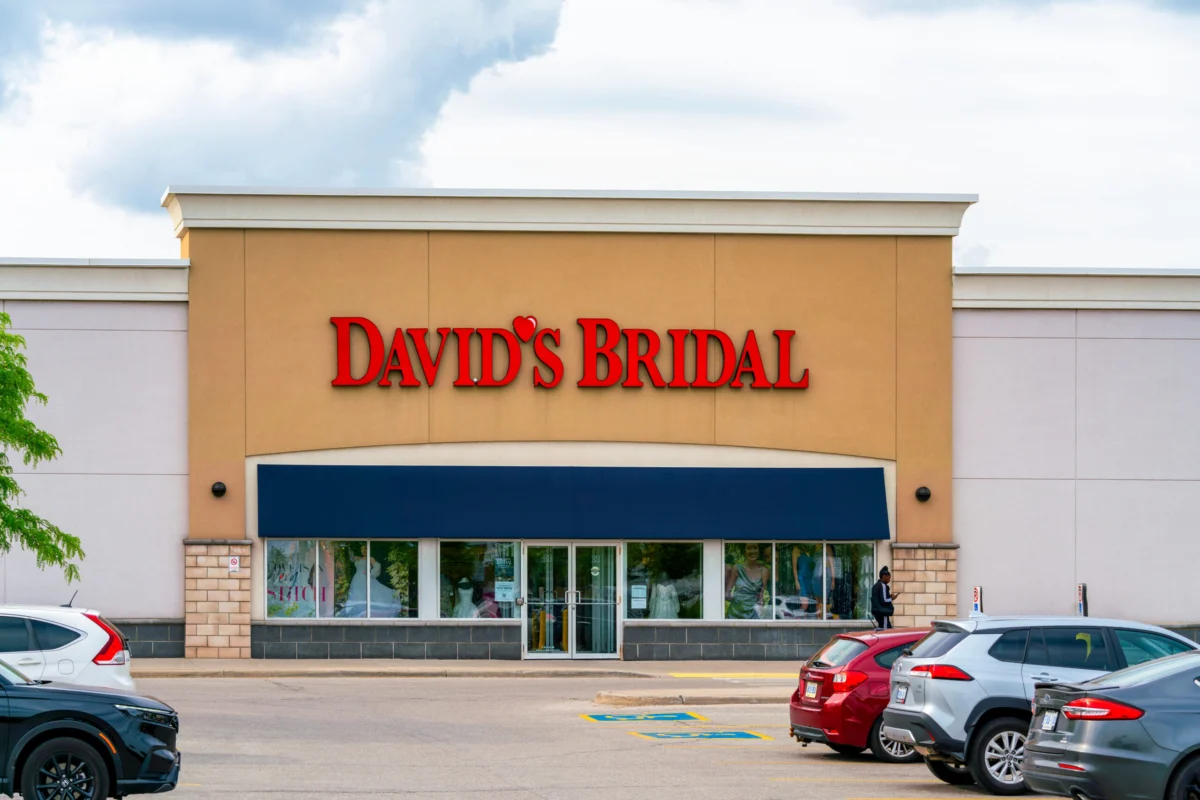
In a transformative move that signals the future of retail-tech integration, David’s Bridal—a titan in the wedding industry—has announced plans to spin off its innovative agentic AI wedding planning platform, Pearl, into a standalone, publicly traded entity. The decision follows a successful 2025 digital transformation that saw David’s Bridal pivot to a robust Shopify-based omnichannel framework, providing the technological foundation necessary for Pearl’s rapid expansion.
The proposed transition, announced via a nonbinding letter of intent with K&F Growth Acquisition Corp. II (a special purpose acquisition company, or SPAC), marks a significant evolution for the 75-year-old retailer. If finalized, the deal will not only take Pearl public but will also see the new entity assume ownership of the iconic David’s Bridal brand and its extensive intellectual property.
The Strategic Architecture of the Deal
The proposed transaction values Pearl at $350 million. To bolster its market entry, the deal includes a $75 million private investment component, with $25 million of that capital committed by CION Investment Corporation, which currently holds the position of David’s Bridal’s largest shareholder.
This move is designed to separate the asset-heavy retail operations from the high-growth, asset-light software and media monetization model that Pearl represents. By operating independently, Pearl is expected to leverage its agentic technology to scale rapidly, while David’s Bridal continues to serve its customer base without interruption to its physical or digital retail services.
A Chronology of Innovation: From Retailer to Tech Powerhouse
The trajectory toward this spin-off has been defined by a series of deliberate, high-stakes technological investments.
- 2024: The Foundation of Media Influence: David’s Bridal acquired Love Stories TV, effectively establishing the "Pearl Media Network." This acquisition was the first major step in creating a closed-loop ecosystem where content, inspiration, and commerce could converge.
- Early 2025: The Shopify Pivot: David’s Bridal completed its migration to Shopify, a move that provided the flexible, scalable infrastructure required to host complex, AI-driven applications.
- Mid-2025: The Rise of Agentic AI: The retailer introduced beta features for its "Pearl" wedding planner. Unlike traditional planning tools, Pearl utilized "agentic AI"—systems capable of performing complex, multi-step tasks for users, such as coordinating with vendors and managing logistics—rather than simply providing static recommendations.
- October 2026: The Public Announcement: David’s Bridal and K&F Growth Acquisition Corp. II formally signed a nonbinding letter of intent to take Pearl public, initiating the spin-off process.
Supporting Data: The Case for Pearl’s Valuation
The market enthusiasm for this transition is grounded in robust performance metrics. David’s Bridal, ranked No. 460 in the Digital Commerce 360 Top 1000 Database and No. 178 in the AI Commerce Rankings, has provided data suggesting that the wedding sector is ripe for this specific brand of technological disruption.
Current estimates from the retailer indicate that 90% of U.S. brides already engage with some facet of the Pearl ecosystem. The business model is built on high-margin sustainability; the company forecasts that Pearl will generate profit margins exceeding 30% by 2026. Looking further ahead, the projections for 2027 are even more aggressive, with expectations that revenue will grow by more than 100% year-over-year, surpassing the $85 million mark.
The "Pearl Connect" platform, which functions as a proprietary engine for converting qualified leads into actual bookings, acts as the primary revenue driver. By bridging the gap between digital inspiration and offline service consumption, Pearl has successfully monetized the "middle-of-the-funnel" wedding industry in a way that traditional retailers have historically struggled to achieve.
Official Responses and Executive Vision
The leadership team behind this transition views the split as a "win-win" scenario that optimizes the strengths of both businesses. Kelly Cook, CEO of David’s Bridal, who is slated to become the CEO of the new Pearl entity, characterized the move as a defining moment for the company’s legacy.
"This is an exciting milestone in David’s Bridal’s 75-year history and a defining moment for our future," Cook said in a press release. "Pearl is shaping the next generation of wedding planning, and this next step will give both businesses room to grow independently while continuing to strengthen each other."
Joining Cook in the transition is Elina Vilk, currently the president and chief business officer at David’s Bridal, who will step into the role of president at Pearl. Together, they aim to refine the "agentic" nature of the software to better connect couples with vendors who can bring their unique visions to life.
From the investment side, the partners at K&F Growth Acquisition Corp. II expressed clear confidence in the financial viability of the proposal. "We were drawn to Pearl’s compelling trifecta of established profitability, highly attractive growth potential, and an unlevered, pristine balance sheet," said co-CEO Dan Fetters. Edward King, the other co-CEO at K&F, added, "Pearl pairs longstanding relationships across the wedding industry with an asset-light software and media monetization model. We believe our capital markets and M&A expertise will help accelerate Pearl’s growth."
Implications for the Retail and Tech Landscapes
The potential spin-off of Pearl holds significant implications for the broader retail industry, particularly for companies operating in the "event-based" commerce space.
1. The Rise of the "Agentic" Retailer
Pearl represents a shift from "shopping as discovery" to "shopping as execution." By using agentic AI, the platform does not just suggest a dress or a photographer; it executes the booking. This creates a high barrier to entry for competitors who rely solely on catalog-based e-commerce.
2. Operational Continuity
For the consumer, the most critical message is the promise of stability. David’s Bridal has gone to great lengths to emphasize that its brick-and-mortar stores, appointment systems, and customer service departments will remain entirely unaffected by the financial restructuring. This distinction is vital for a brand that relies heavily on the emotional weight of in-person retail experiences.
3. The Future of Retail Media Networks
By folding the Love Stories TV acquisition into the Pearl Media Network, the company has created a blueprint for how legacy retailers can transform their historical brand equity into a digital media play. Investors will be watching closely to see if other retailers in the Top 1000 Database attempt to replicate this "platformization" of their own customer bases.
4. A New Model for SPACs
The involvement of a SPAC like K&F Growth Acquisition Corp. II highlights a continuing, albeit evolving, interest in using special purpose vehicles to bring tech-forward legacy brands into the public market. The inclusion of private capital from a major stakeholder like CION Investment Corporation provides a layer of institutional trust that may soothe market volatility concerns.
Conclusion: Looking Ahead
While a definitive agreement has yet to be finalized, the framework of the deal is clear: the future of David’s Bridal lies in the separation of the physical and the digital. By offloading the burden of retail operations to a focused, independent entity, and allowing Pearl to pursue the aggressive growth of an AI-tech firm, the company is betting that the synergy between the two will be more valuable than their current combined state.
As the wedding industry continues to modernize, Pearl’s transition will serve as a bellwether for how effectively legacy retail can integrate artificial intelligence into the core of its business model. For now, the stakeholders involved are positioning the deal not as a sale, but as a strategic release of latent value, aimed at capturing the next generation of digital-first consumers.
For ongoing updates on this story and further insights into the intersection of AI and online retail, industry professionals are encouraged to monitor the latest data releases from the Digital Commerce 360 database.