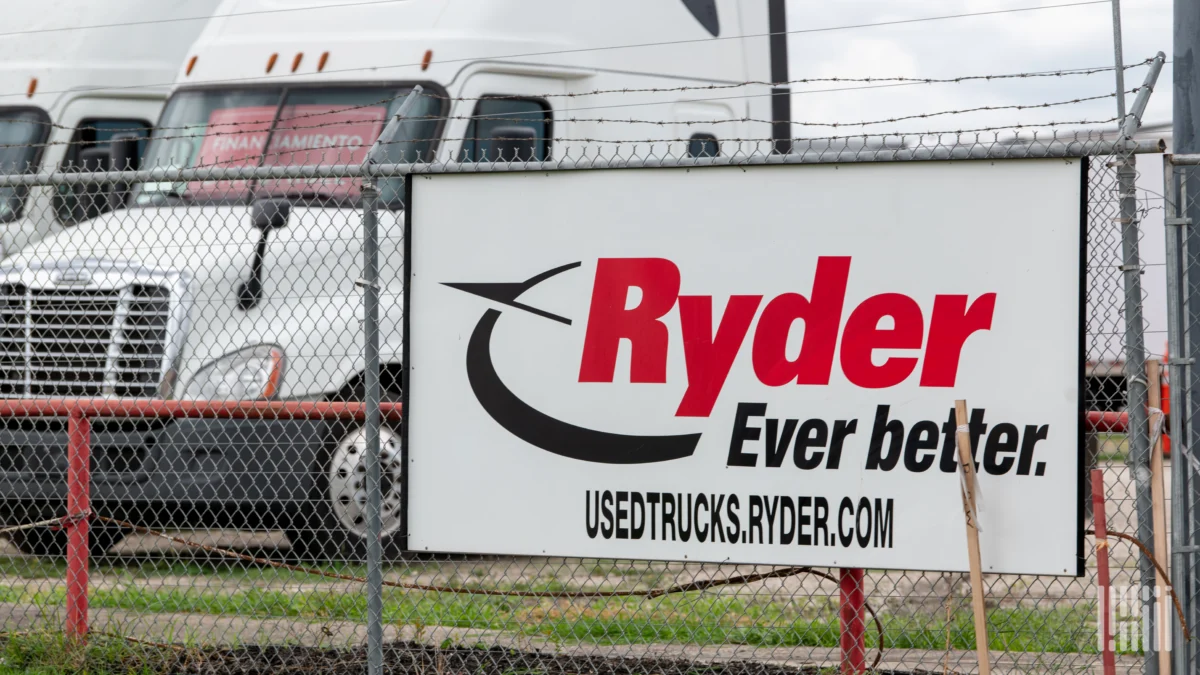
As the heavy-duty trucking industry approaches the implementation of the Environmental Protection Agency’s (EPA) stringent 2027 nitrogen oxide (NOx) emissions standards, the logistics sector finds itself at a critical crossroads. For industry giant Ryder System, Inc. (NYSE: R), the impending regulatory shift represents both a capital-intensive hurdle and a test of its fleet management agility. Following a robust third-quarter earnings report that saw the company’s stock surge by over 10%, analysts are now focused on how Ryder intends to balance aggressive growth with the complex, evolving landscape of modern diesel technology.
A Strong Financial Foundation
Ryder’s third-quarter performance provided a significant vote of confidence from Wall Street. Shares jumped 10.49% to $265.53 following the release, representing a substantial 25.22% gain in recent performance cycles. While the stock remains slightly off its 52-week high of $284.25—a peak established on June 12—the earnings beat has solidified investor sentiment regarding the company’s operational health.
The core of this growth lies in Ryder’s ability to manage its two primary business pillars: ChoiceLease (long-term leasing) and its Rental segment (short-term arrangements). With the earnings call serving as a venue for strategic outlooks, the central question posed by analysts was whether customers are hesitating to commit to 2027-compliant vehicles, which are expected to carry a higher price tag due to advanced emissions-control engineering.
The EPA ’27 Horizon: A Regulatory Quagmire
The EPA’s 2027 standards represent one of the most significant overhauls in commercial vehicle manufacturing in decades. The rules mandate a substantial reduction in NOx emissions, forcing Original Equipment Manufacturers (OEMs) to implement advanced hardware and software solutions. However, the path to compliance remains fluid.
The EPA has introduced an ongoing amendment process, which includes controversial noncompliance penalties and adjustments to "deratement" rules. The latter is particularly concerning to fleet managers: these rules would mandate that a vehicle automatically slow down or cease operation if its diesel exhaust fluid (DEF) levels fall below a specific threshold. This uncertainty regarding final technical specifications has left many fleet operators in a state of "wait and see," complicating the procurement planning process for major lessors like Ryder.
Chronology of Market Sentiment
- Early 2024: Industry anticipation builds regarding the upcoming 2027 EPA mandates.
- June 2026: Ryder reaches a 52-week stock high of $284.25, reflecting market optimism in its diversified logistics strategy.
- Q3 2026: Ryder reports solid earnings, beating analyst expectations, but notes that fleet growth remains below historical norms.
- Post-Earnings Call (October 2026): Leadership confirms that while price hikes for 2027 equipment are inevitable, there has been no significant "pre-buy surge"—a common industry phenomenon where companies rush to buy current-spec trucks to avoid the cost of new technology.
Fleet Management and the "Pre-Buy" Phenomenon
In historical cycles of regulatory change, the trucking industry often experiences a "pre-buy" surge, where companies stock up on older, cheaper, and more familiar engine technology before new, expensive, and potentially unreliable mandates take effect. Interestingly, Ryder has reported no such trend.
Tom Havens, President of Ryder’s Fleet Management Solutions, noted during the earnings call that while the industry is well aware of the coming price increases, customers have shown limited interest in aggressive pre-buying. "Some customers took advantage of it, but not to any large extent," Havens stated. This lack of a surge suggests that customers may be waiting for more clarity on the final EPA rules before committing to large-scale fleet renewals.
Addressing the Capacity Gap
Analyst Jeffrey Kauffman of Citizens JMP Securities highlighted a critical observation: the size of Ryder’s fleet has remained below historical norms, particularly regarding tractors. When questioned on whether Ryder had secured enough production "slots" with OEMs to meet demand, CEO John Diez remained firm.
"We are confident we can grow that fleet," Diez asserted. He pointed to recent capital expenditure budgets, which indicate that the company has already begun the process of procuring equipment. However, Diez offered a cautious caveat regarding utilization rates. While the current rental fleet utilization sits at a healthy 77%—up from 70% a year ago—it remains below the 81.6% peak observed during the post-COVID supply chain crunch. "Utilization is not yet at the ‘screaming red’ levels we saw post-COVID, but it will get there if we don’t have the fleet," Diez noted.
The Used Vehicle Hedge
A key differentiator for Ryder is its robust used vehicle sales division, which serves as a powerful hedge against new vehicle market volatility. With current used vehicle inventories sitting at 7,300 units—at the lower end of the company’s target range—Ryder is strategically shifting toward retail channels.
Retail sales are significantly more profitable than wholesale liquidations. In the third quarter, retail sales accounted for 61% of all used vehicle transactions, up from 54% a year ago. Diez expects this to exceed 70% by 2027. By focusing on retail, Ryder is insulating its bottom line from the potentially erratic pricing of the wholesale market.
The financial impact is substantial: Ryder has upgraded its forecast for annual used vehicle gains from an initial estimate of $40 million to a projected $50 million to $60 million. This pivot demonstrates a sophisticated approach to asset lifecycle management, ensuring that even as new truck procurement becomes more complex, the company’s revenue remains insulated.
Labor Dynamics in Dedicated Transportation
Beyond hardware, Ryder’s Dedicated Transportation Solutions (DTS) segment offers a unique window into the labor market. As the competition for qualified drivers remains fierce, Ryder has employed a proactive strategy to mitigate wage inflation.
John Sensing, President of DTS and Supply Chain Solutions, explained that while the company is seeing mid-to-single-digit wage increases in specific regions, these costs are largely managed through "annual CPI openers" and driver wage indices. These contractual mechanisms allow Ryder to pass necessary wage increases to customers, ensuring that the company’s margins remain protected against rising labor costs.
Sensing emphasized that Ryder’s retention success is partly due to the nature of the work. "80% of our jobs are home every day or every night," Sensing noted. This "home-daily" model serves as a massive competitive advantage in an industry where long-haul, multi-day routes are becoming increasingly difficult to staff.
Implications: A Strategic Balancing Act
The road to 2027 is fraught with uncertainty, yet Ryder appears to be navigating the terrain with a mix of cautious optimism and aggressive financial hedging. By prioritizing retail sales for used vehicles and utilizing contractual indices to manage labor costs, the company is positioning itself to weather the regulatory storm.
However, the primary challenge remains: as the EPA’s deadline nears, the company must effectively balance the need for fleet expansion with the unknown costs of future-compliant equipment. If the regulatory environment remains in flux, Ryder’s ability to secure OEM slots and maintain high utilization will be the defining factors of its fiscal success over the next 18 months.
For investors and industry observers alike, the upcoming fourth-quarter earnings call will be critical. It promises to provide a clearer picture of the company’s 2027 roadmap, shedding light on whether the current strategy of steady, measured growth will suffice against the impending, and potentially disruptive, wave of emissions-compliance requirements. As Ryder continues to evolve from a traditional leasing company into a more dynamic logistics and asset-management powerhouse, its performance will serve as a bellwether for the broader heavy-duty transportation sector.