The promise of Retrieval-Augmented Generation (RAG) is simple: ground an LLM in provided source text to eliminate hallucinations. Yet, as any engineer working in production AI knows, the reality is far more complex. Even with a perfect RAG setup, LLMs can subtly misinterpret constraints, misstate figures, or confidently assert policies that don’t exist in the source.
Traditional approaches to this problem—often relying on post-generation human review or a single, secondary "judge" LLM—frequently treat the output as a one-off solution. This leaves little room for error correction or nuanced verification. A new, more robust architecture is emerging, centered on the JEV (Justified Evidence Verification) model from TypeSafe AI. By generating multiple candidate answers and subjecting each to a rigorous, multi-point automated check, developers can shift from a "hope for the best" approach to a systematic, high-assurance pipeline.

The Fragility of Single-Shot Generation
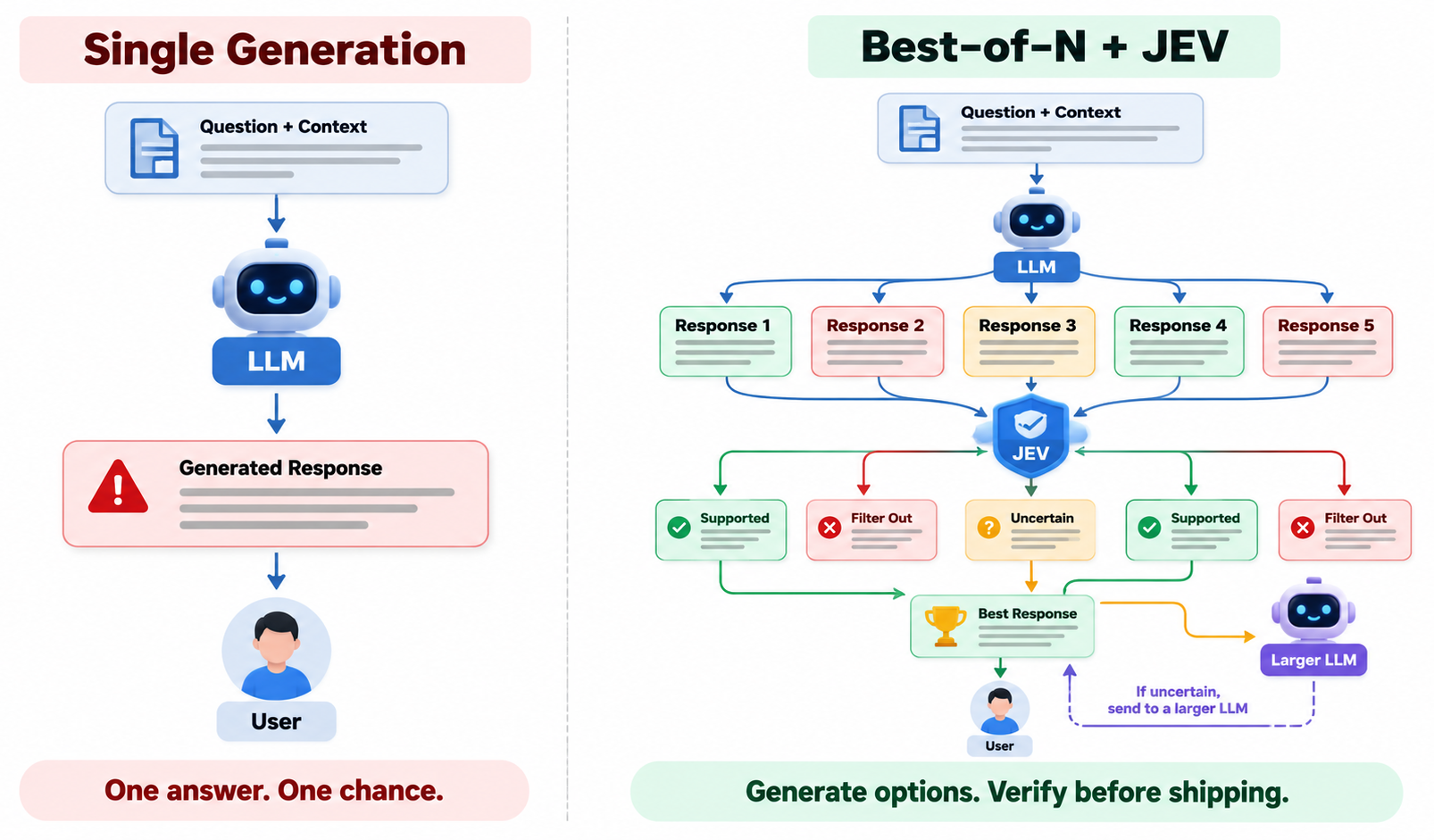
In the current standard for RAG pipelines, the process is linear: the user asks a question, the system retrieves relevant context, and the LLM produces a single response. If that response contains a hallucination—a minor numerical error or an incorrectly cited policy—it reaches the end-user immediately.
The RAGTruth study, which analyzed nearly 18,000 LLM-generated responses, underscores this vulnerability. The findings revealed that even when high-quality context is provided, LLMs frequently produce answers that are incomplete or factually incorrect. These errors are often deceptive; a model might cite the correct policy document but apply a rule from an enterprise plan to a standard user, or swap a decimal point in a critical financial figure. Because these answers often sound professional and authoritative, they can easily bypass human scrutiny in fast-paced environments.
Chronology of the JEV Pipeline: A Multi-Stage Defense
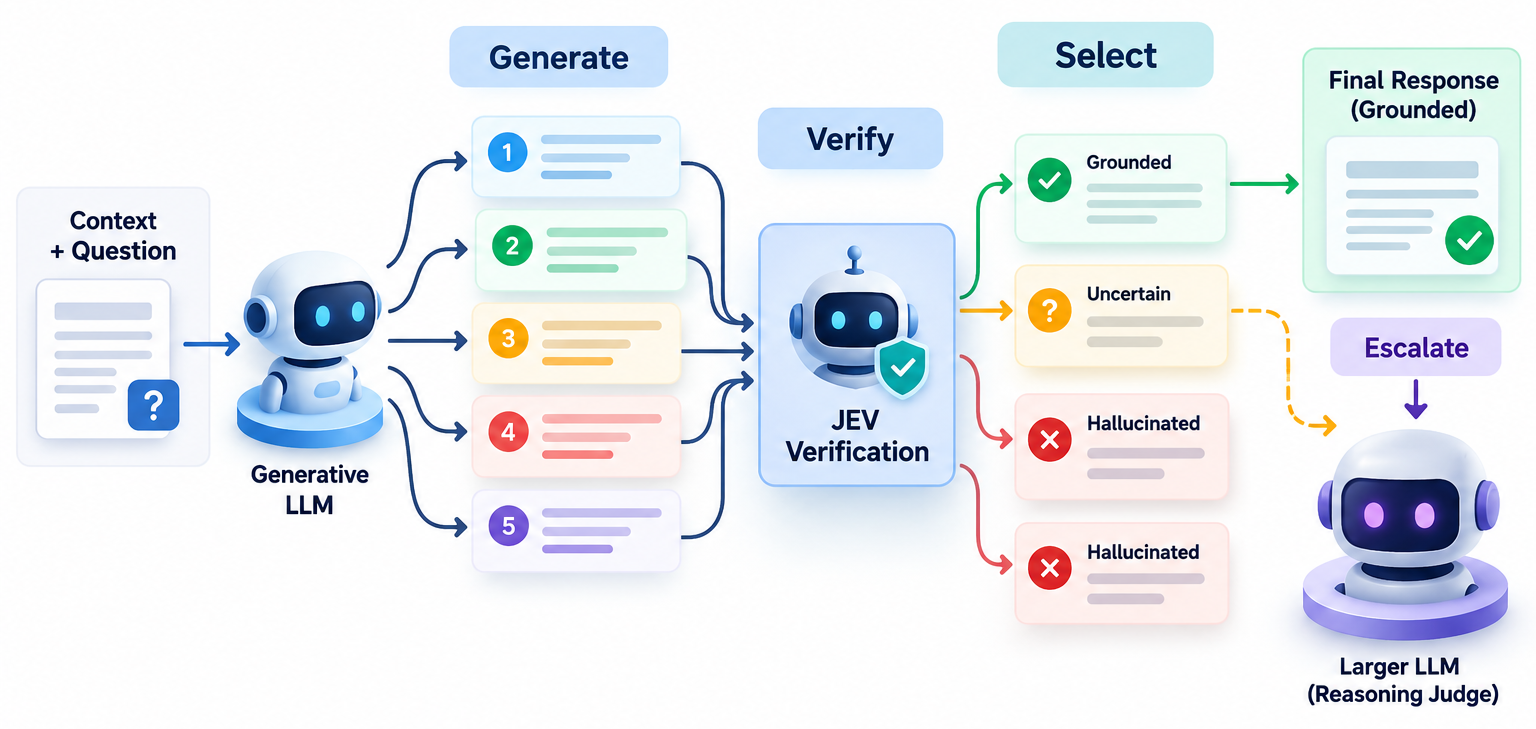
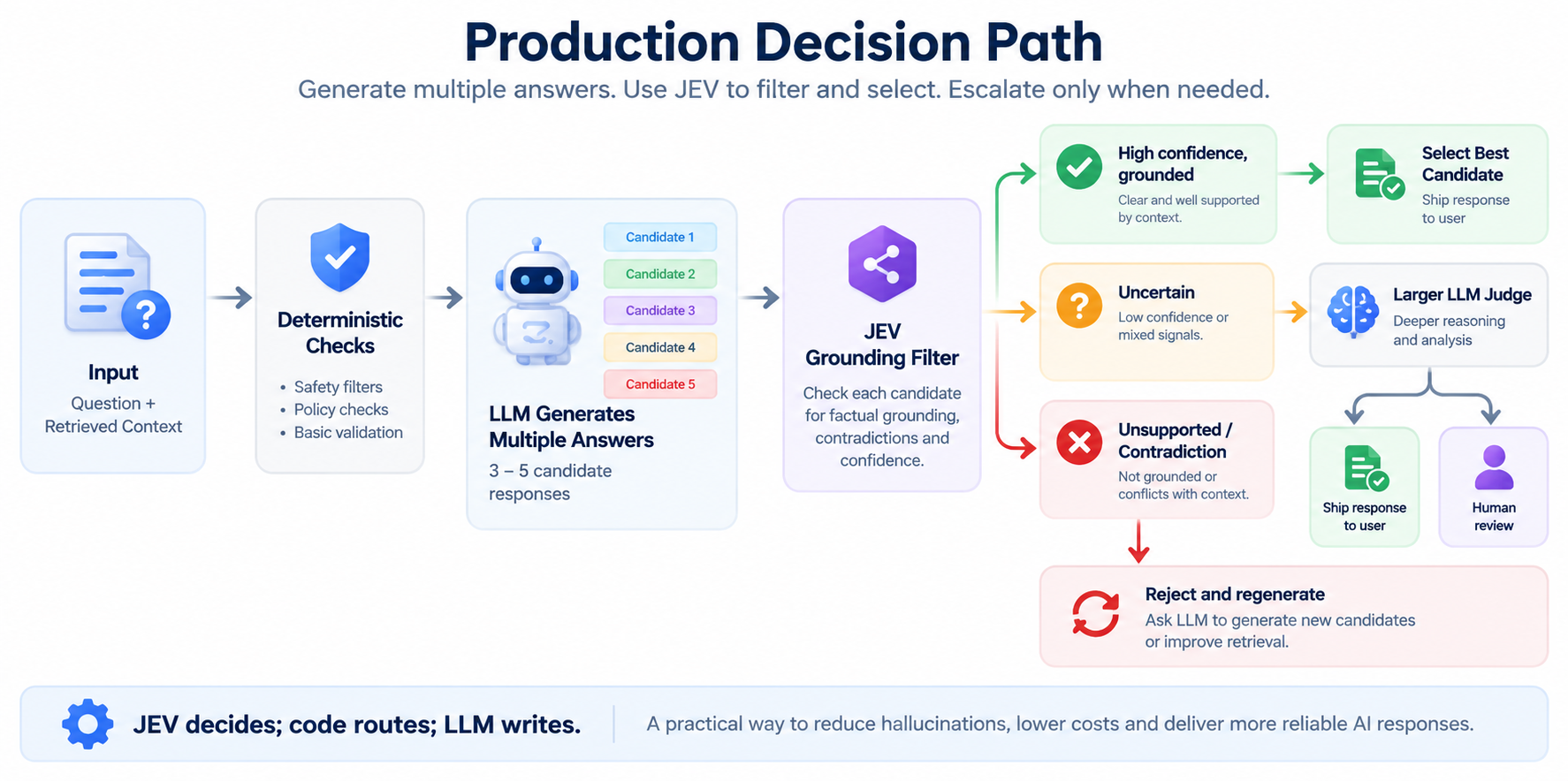
To mitigate these risks, the JEV-based architecture introduces a branching pipeline that moves beyond simple generation. Instead of asking for one answer, the system prompts the LLM to generate multiple variations of the response. These candidates are then processed through a "hallucination filter" before reaching the user.
1. Generation and Diversity
The pipeline begins by tasking a generator model with producing five distinct answers to the same prompt. To ensure variety, developers can inject subtle style hints—such as "be concise," "start with the evidence," or "focus on exceptions"—into the prompt for each iteration. While temperature settings provide some randomness, these style instructions ensure the model explores different ways of framing the truth.
2. Automated Verification via JEV
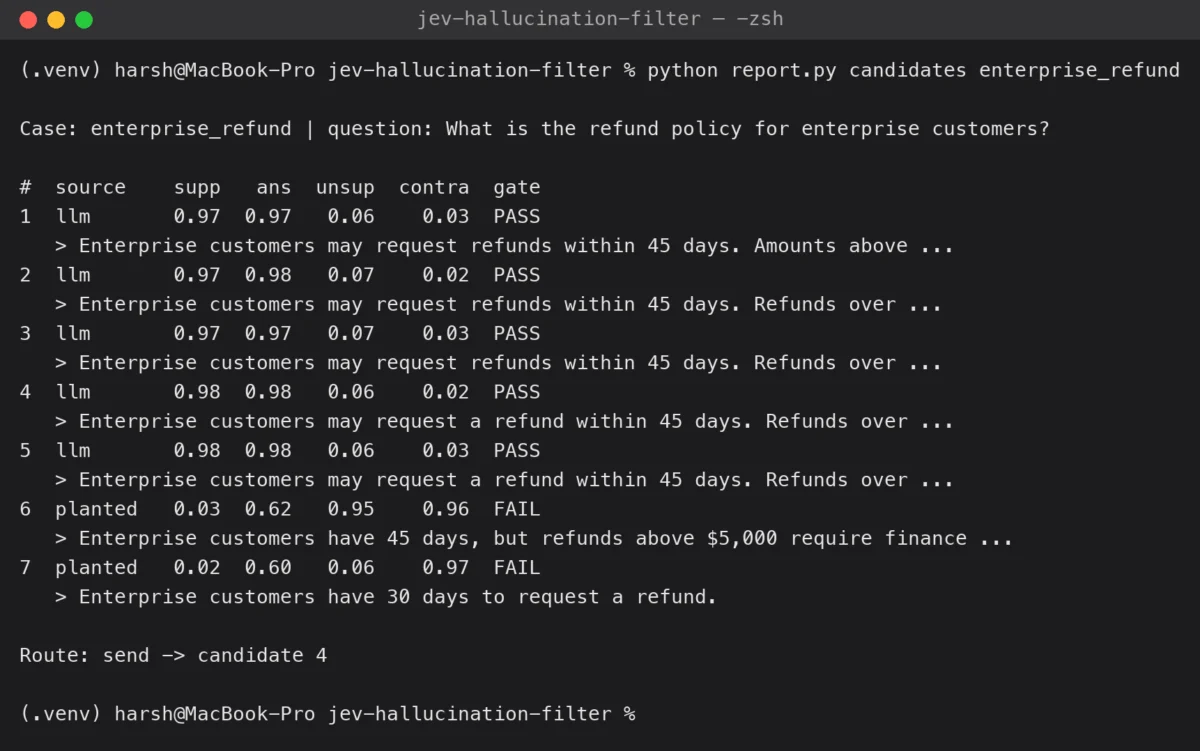
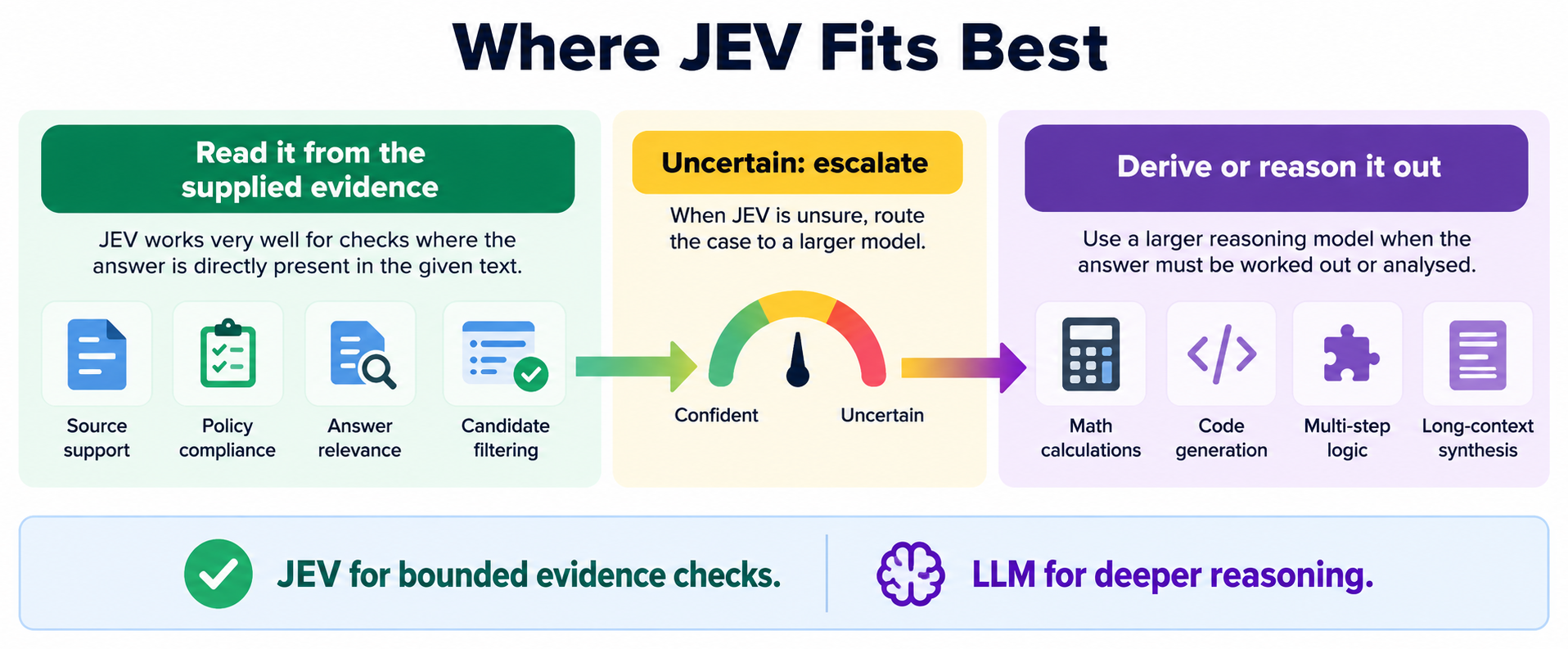
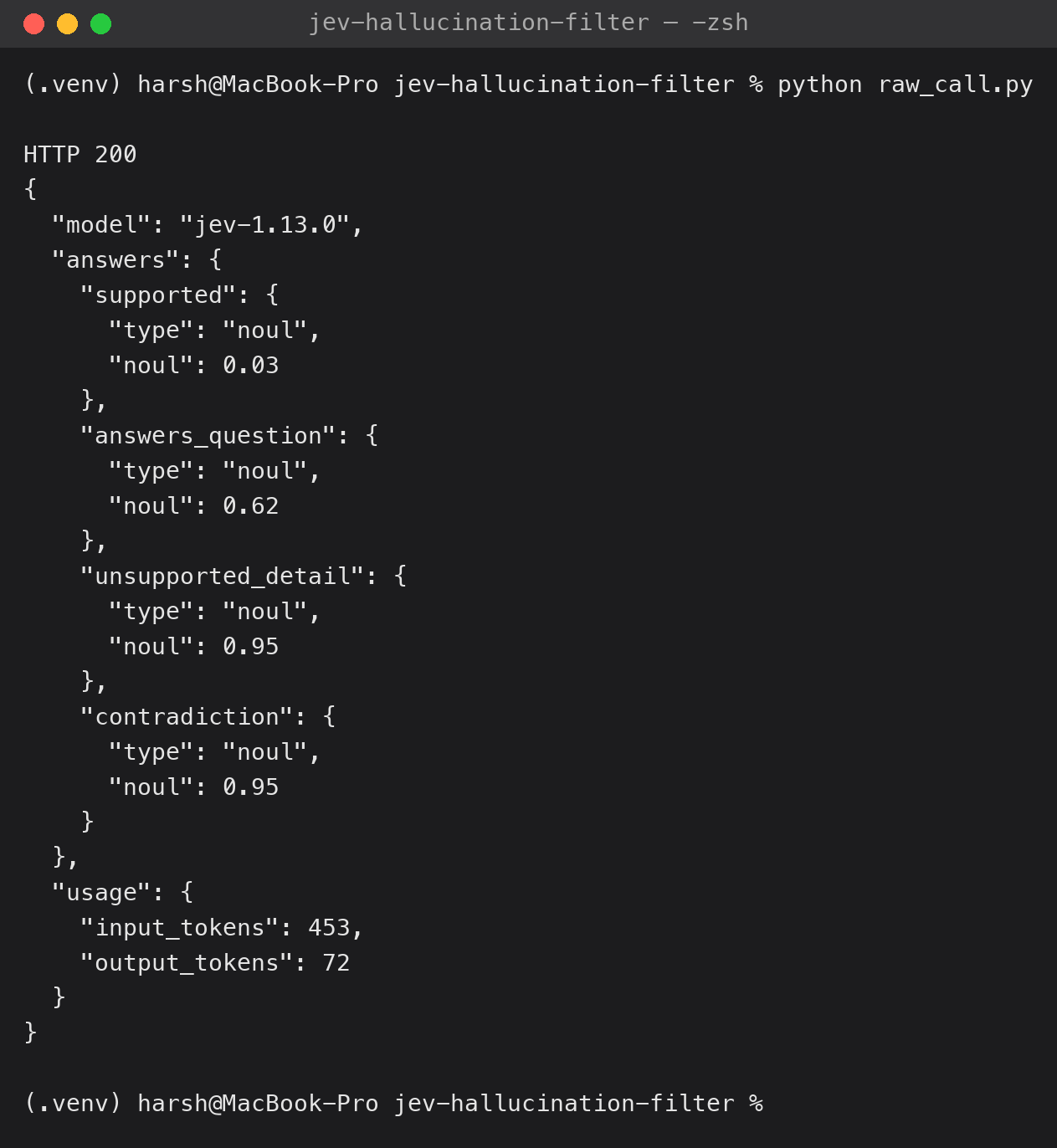
Once the candidates are generated, each one is passed to JEV. Unlike general-purpose LLMs that might attempt to "reason" or "rewrite" an answer, JEV is purpose-built to act as a verifier. It does not produce paragraphs or explanations; it returns discrete probability scores for four specific binary checks:
- Supported: Is every fact backed by the evidence?
- Answers Question: Does it directly address the user’s intent?
- Unsupported Detail: Does it hallucinate facts absent from the context?
- Contradiction: Does it claim anything that runs counter to the provided text?
3. The Hard Gate and Escalation
The final stage is the pipeline’s logic layer. Using a weighted scoring mechanism, the system filters out candidates that fail to meet strict thresholds. If a candidate is "risky"—meaning it fails the hard gate—it is discarded. If all candidates fail, or if the system remains unsure, the request is escalated to a more powerful, "stronger" judge LLM. This model acts as the final arbiter, choosing the best candidate from the top two contenders or rejecting the response entirely to protect the user from misinformation.
Supporting Data: Testing the Filter
To validate this approach, engineers have conducted "lab-scale" experiments comparing a single-shot approach against the JEV-filtered cascade. In one test involving 50 questions, the JEV cascade successfully mitigated errors that occurred in 100% of the standard model responses.
Crucially, the economics of this system are compelling. By using a cheap, fast model for the initial generation and a targeted verification model (JEV) for filtering, the total cost of the cascade can be significantly lower than relying on a heavy, expensive model for every query. In a vendor-provided test, the JEV cascade cost roughly 7% of the total expenditure required to run an expensive model for every single generation.
Performance Metrics
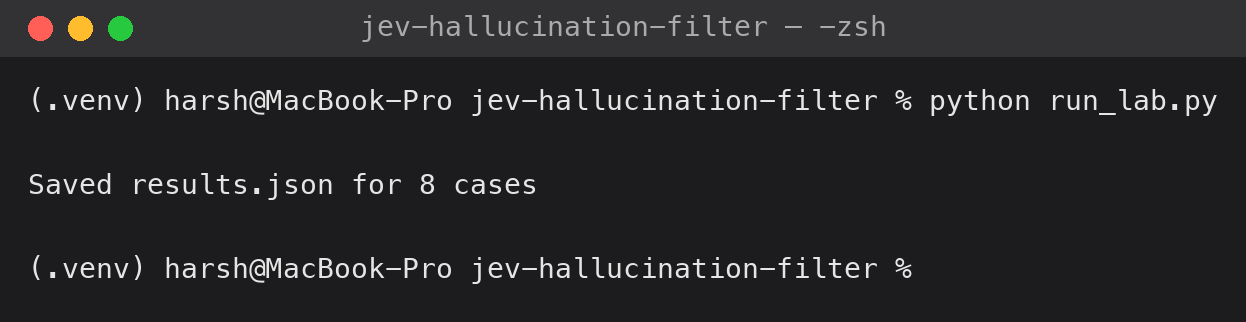
In our internal evaluation of eight tricky test cases, the JEV pipeline demonstrated:
- High Sensitivity: Planted "bogus" answers—where figures were intentionally altered—were consistently caught and blocked by the filter.
- Correct Selection: When multiple "correct" variations were generated, the system consistently selected the most compliant answer.
- Escalation Efficacy: In instances where the source text was ambiguous, the system successfully identified the need for a stronger judge, effectively balancing cost with reliability.
Official Perspectives and Implications
TypeSafe AI emphasizes that JEV is not a silver bullet; it is an analytical tool. The company maintains that JEV itself cannot "hallucinate" in the traditional sense because its outputs are strictly constrained to predefined lists and probability scores. However, like any model, it can occasionally miscalculate or misinterpret the context.
The implication for enterprise AI is clear: reliability is an architectural choice, not a model feature. By decoupling generation from verification, developers can create systems that are "self-aware" regarding their own uncertainty. When the system detects a potential hallucination, it doesn’t have to guess—it can refuse to answer, ask for clarification, or escalate to a human. This transition from "Generative AI" to "Verified Generative AI" is essential for sectors like legal, finance, and healthcare, where a 1% error rate is not just a nuisance, but a liability.
Strategic Recommendations
For teams looking to integrate JEV into their production stacks, the following implementation strategy is recommended:
- Establish Baselines: Before deploying, use your own labeled data to measure the "oracle" best-of-N performance. This will tell you if generating five answers is actually providing better options or just more noise.
- Optimize the Gate: The "hard gate" thresholds (e.g., passing if supported > 0.85) should be tuned to your specific risk tolerance. In high-risk environments, set the gate to be more conservative.
- Know the Limitations: Do not use JEV for math, code, or creative reasoning. It is a tool for grounded verification. For reasoning tasks, stick to specialized models or standard execution environments.
- Monitor Costs: While five generations are often cheap, they are still five times more expensive than one. Continuously monitor the cost-per-correct-answer to ensure the pipeline provides value relative to the latency and expense.
Conclusion
The pursuit of a "perfect" LLM that never hallucinates is likely a futile endeavor. Instead, we must build systems that assume the LLM will occasionally fail and incorporate mechanisms to catch those failures in real-time. The JEV pattern represents a major step forward in this regard, offering a scalable, programmable, and auditable path toward more reliable AI. By separating the roles of "creative generator," "analytical verifier," and "logical arbitrator," developers can finally build LLM-driven applications that stand up to the rigors of professional use.