As artificial intelligence (AI) transitions from an experimental novelty to the backbone of global enterprise operations, a stark reality has emerged: the speed of AI deployment is drastically outstripping the maturity of organizational defenses. According to the PwC 2027 Global Digital Trust Insights survey, a profound sense of vulnerability is permeating the C-suite. Business and technology leaders, despite massive investments in digital transformation, overwhelmingly identify cyberattacks against AI systems as their most daunting and least prepared-for challenge.
The survey, which canvassed 3,934 senior executives across 71 countries, paints a picture of a digital landscape in flux, where the very tools designed to generate competitive advantage are simultaneously creating an unprecedented attack surface.
Main Facts: The Anatomy of the AI Security Crisis
The core takeaway from the PwC report is not that organizations are ignoring cyber threats, but rather that the nature of these threats has evolved faster than traditional security frameworks. Fifty percent of surveyed leaders explicitly identified AI-centric cyberattacks as the primary threat they are currently ill-equipped to handle.
This "preparedness gap" is not merely theoretical. It refers to a concrete set of attack vectors that target the specific architecture of AI models—ranging from the data sets used for training to the autonomous agents interacting with human-led systems. Unlike traditional malware or phishing, which often target human fallibility or software vulnerabilities, AI attacks exploit the logic, statistical foundations, and autonomous decision-making loops inherent in machine learning.
The study highlights three specific areas of concern that have become the primary focus of cybersecurity risk assessments:
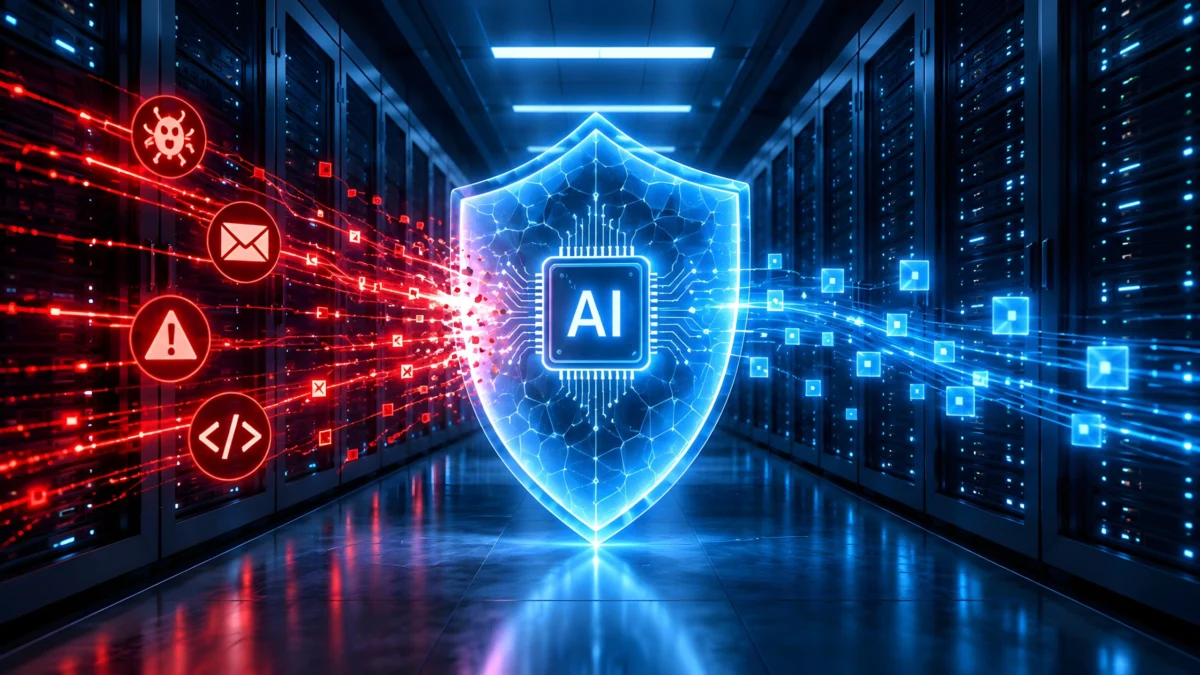
- Autonomous Botnets: Over 53% of leaders fear the rise of AI-driven botnets that can orchestrate large-scale, adaptive, and hard-to-detect attacks.
- Adversarial Attacks: 52% of respondents cited the susceptibility of models to "adversarial inputs"—carefully crafted data designed to trick an AI into making incorrect, dangerous, or malicious decisions.
- Data Poisoning: An equal 52% expressed concern over the integrity of their training data, fearing that malicious actors could inject subtle, harmful information into datasets to manipulate future model outputs.
Chronology: The Evolution of the AI Threat Landscape
To understand why leadership feels so exposed, one must look at the rapid maturation of the threat landscape over the last decade.
2015–2020: The Era of Awareness
In the early years of the current AI boom, the focus was primarily on "Data Privacy" and "Data Governance." The primary concerns were centered on compliance—ensuring that personal data was not leaked during the training of machine learning models. Security was viewed through a traditional lens: protect the infrastructure, protect the data repository.
2021–2024: The Proliferation of Generative AI
The launch of advanced Large Language Models (LLMs) changed the paradigm. AI was no longer just a backend utility; it became a user-facing interface. This period saw the rise of "Prompt Injection" attacks, where users could bypass model guardrails. Security teams scrambled to implement "Red Teaming" protocols, but they were often playing catch-up to the rapid-fire release cycles of AI vendors.
2025–2027: The Rise of Autonomous and Adversarial Exploits
We have now entered an era where AI is used by both the defender and the attacker. The PwC report underscores that we are currently in a "Wild West" phase. Threat actors are utilizing generative AI to automate the creation of malware, while simultaneously targeting the foundational models of corporations. The transition from human-in-the-loop to autonomous agent systems has created a window of vulnerability where a single successful adversarial attack could potentially cascade across an entire enterprise’s automated decision-making network.
Supporting Data: Understanding the Global Scope
The PwC survey provides a critical look at the breadth of this concern. By surveying 3,934 leaders, the study captures a consensus that transcends regional and industrial boundaries.
Regional Perspectives
The survey indicates that the sense of vulnerability is remarkably consistent across North America, Europe, and the Asia-Pacific region. In highly regulated environments, such as the financial services and healthcare sectors, the fear of "Data Poisoning" is particularly acute. If a medical AI, trained on contaminated data, begins providing incorrect diagnostic recommendations, the legal and ethical liabilities are catastrophic.
The Investment Paradox
Perhaps the most striking data point is that this fear exists despite a record-breaking increase in cybersecurity budgets. Companies are spending more than ever on AI-driven cybersecurity tools, yet the perception of preparedness is falling. This suggests that organizations are suffering from "Tool Fatigue"—the implementation of dozens of disconnected security products that do not provide a holistic view of AI-specific risks.
Official Responses and Strategic Shifts
How are organizations reacting to this data? The consensus among global security leaders, as reflected in the insights, suggests a three-pillar shift in strategy:
1. From Perimeter Security to Model Integrity
Organizations are moving away from the "firewall" mentality. Instead, they are adopting "Model Security" frameworks. This involves rigorous validation of the data pipeline, ensuring that every byte of information entering a training set is authenticated and verified.
2. The Rise of AI-Specific Compliance
Regulatory bodies, such as those overseeing the EU AI Act and emerging frameworks in the United States, are forcing companies to adopt transparency. Organizations are now hiring "AI Risk Officers" who report directly to the board, bridging the gap between technical data science teams and risk-averse legal departments.
3. Collaborative Defense (The "Red Team" Ecosystem)
The survey indicates a shift toward more proactive testing. Many companies are now engaging in "adversarial simulations"—hiring ethical hackers specifically tasked with attempting to "poison" their models or "trick" their AI agents. This shift from passive monitoring to active penetration testing is the current gold standard for mitigating AI risk.
Implications: The Long-Term Consequences for Business
The findings from the PwC 2027 report carry profound implications for the future of the digital economy.
The Trust Deficit
If consumers believe that the AI systems they interact with are susceptible to manipulation, the adoption rate of new technologies will inevitably stall. Trust is the currency of the digital age; if an organization cannot guarantee the integrity of its AI, it cannot guarantee the safety of its customers.
Legal and Regulatory Liability
As we look toward 2030, we can expect a wave of litigation centered on "AI Negligence." If a company deploys an AI system without proper adversarial protections, and that system causes financial or physical harm, the legal fallout will likely be unprecedented. Boards of directors are now being warned that "not knowing" is no longer a valid legal defense.
The Competitive Advantage of Security
Conversely, organizations that solve the "AI Preparedness" puzzle will have a massive competitive advantage. In a world where AI-generated content and decisions are treated with automatic skepticism, companies that can prove the security, auditability, and resilience of their models will be the ones that win the market’s trust.
Final Thoughts
The PwC 2027 Global Digital Trust Insights survey serves as a vital wake-up call. It reveals that we are currently in a state of high-tech insecurity. While AI holds the promise of unprecedented productivity and innovation, its security cannot be an afterthought.
The path forward requires a fundamental shift in how business leaders perceive the threat. It is not just about defending against hackers; it is about defending the very intelligence that powers the modern enterprise. As the survey concludes, the challenge is not just technical—it is a leadership imperative. Leaders must prioritize "Digital Trust" as highly as they prioritize AI capability. Only through a combination of rigorous testing, architectural resilience, and a culture of security can organizations turn the tide on these emerging threats and ensure that their AI systems remain robust, reliable, and secure in the face of an ever-evolving threat landscape.
The era of blind trust in machine intelligence is over; the era of verified, defensible AI must begin now.