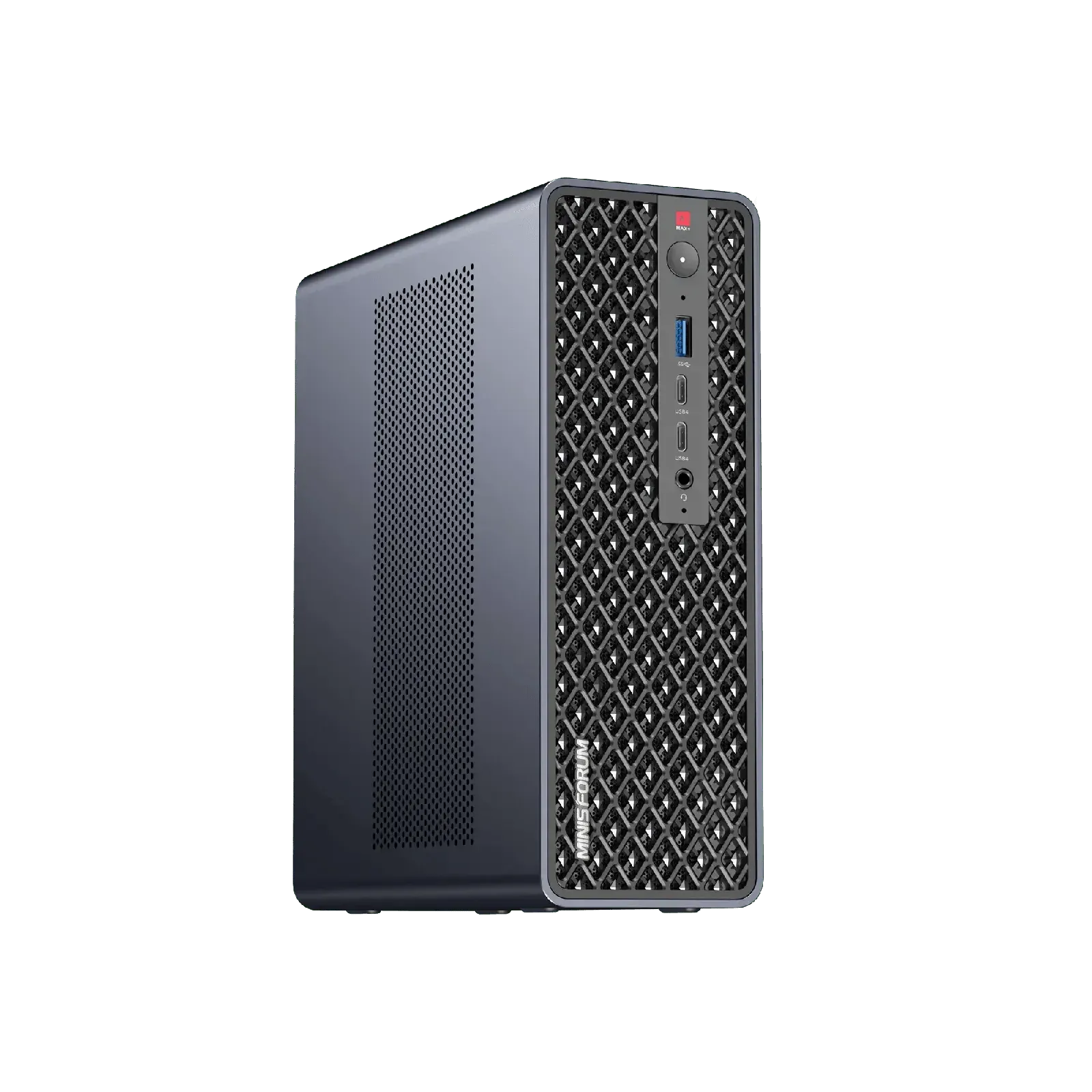
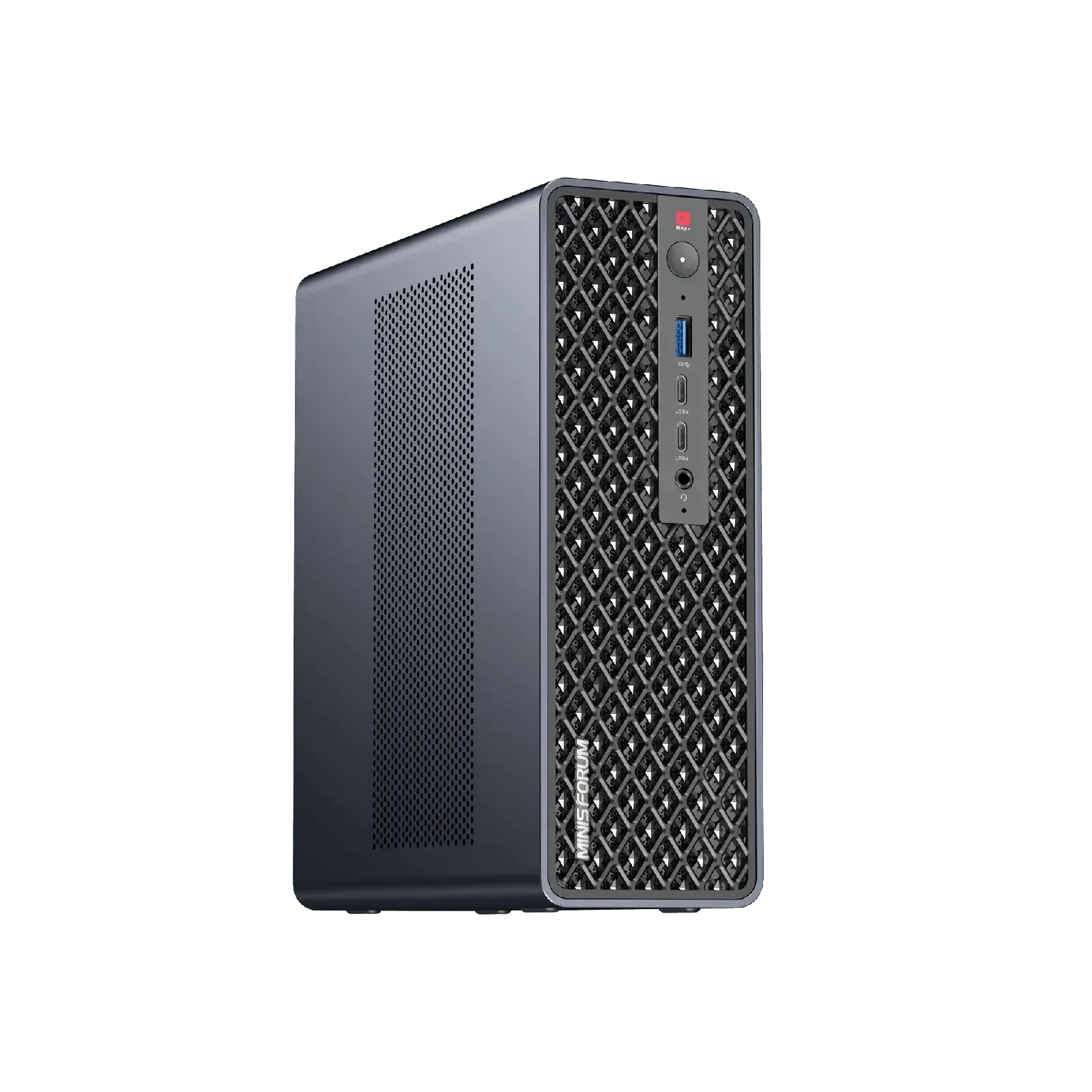
Minisforum has officially opened pre-orders for its latest high-performance compact workstation, the MS-S1 MAX-P495. Housed in a remarkably dense 3.5-liter chassis, this machine is designed to serve as a localized hub for advanced artificial intelligence development. Built around AMD’s cutting-edge Ryzen AI Max+ PRO 495 processor, the device represents a strategic pivot for Minisforum: moving away from general-purpose desktop computing and toward the specialized, memory-hungry requirements of local AI inference and model fine-tuning.
With a price tag of $7,399, the MS-S1 MAX-P495 is positioned firmly in the professional workstation market. While the headlines surrounding the launch focus on the processor’s 16 Zen 5 cores and the 55 TOPS (Trillions of Operations Per Second) NPU, the true value proposition lies in its massive 192GB of unified memory.
Main Facts: A Technical Overview
The MS-S1 MAX-P495 is a specialized piece of hardware that defies the typical expectations of a "mini PC." Under the hood, the system is powered by the AMD Ryzen AI Max+ PRO 495, an APU that integrates the processor, memory controller, and high-end graphics into a single package.
Key Specifications:
- Processor: AMD Ryzen AI Max+ PRO 495 (16 Zen 5 Cores, 32 Threads)
- Boost Clock: Up to 5.2 GHz
- AI Performance: 55 TOPS (NPU), 131 TOPS (Total Platform)
- Graphics: Radeon 8065S (40 RDNA 3.5 Compute Units @ 3.0 GHz)
- Unified Memory: 192GB LPDDR5X (8,533 MT/s)
- Storage: 2TB NVMe SSD (Configurable)
- Connectivity: Dual 10GbE LAN, Dual 80Gbps USB4 v2 ports
- Cooling: Six-heat-pipe, dual-blower active cooling system
The device is expected to begin shipping in mid-October 2026. While the $7,399 price point is marketed as a 20% discount from a suggested retail price of $9,249, it remains a significant investment, targeting enterprise developers, researchers, and AI enthusiasts who require massive memory bandwidth in a portable form factor.
Chronology of Development
The trajectory leading to the MS-S1 MAX-P495 is marked by a rapid evolution of AMD’s "Strix Halo" silicon architecture and Minisforum’s commitment to the small form factor (SFF) workstation category.
The Foundation: The Original MS-S1 MAX
In 2025, Minisforum launched the original MS-S1 MAX, which introduced the industry to the potential of a high-performance, rack-mountable mini-PC. Powered by the Ryzen AI Max+ 395, that system set the benchmark for compact workstations. It was highly praised for its 128GB of memory and its ability to handle demanding tasks in a 2U-compatible rack chassis.
The Refresh: May 2026
In May 2026, AMD announced the Ryzen AI Max PRO 400 series. This update was not a complete architectural overhaul but a refined iteration of the 300 series. The primary goal was to address the growing demand for larger local LLM (Large Language Model) capacity. AMD boosted the memory controller capabilities, allowing for the 192GB configuration that defines the current P495 model.
The Present: October 2026
The launch of the MS-S1 MAX-P495 marks the conclusion of this transition phase. By integrating the refined silicon into their proven chassis design, Minisforum has created a product that serves as a bridge between consumer hardware and enterprise-grade AI infrastructure.
Supporting Data: Why Memory Trumps Clock Speed
For the casual user, a 100 MHz boost in CPU clock speed or a 10% increase in NPU performance might seem like the most critical upgrades. However, in the world of professional AI inference, those metrics are secondary to memory capacity and throughput.
The Memory Bottleneck
Large Language Models (LLMs) operate on a "mixture-of-experts" (MoE) architecture. While a model might have 300 billion parameters, only a fraction are "active" at any given time. However, to run these models locally, the entire model must reside in the system’s memory. The jump from 128GB on the previous model to 192GB on the P495 is the difference between being unable to load a specific model and running it with high efficiency.
Real-World Performance Metrics
Minisforum’s internal testing demonstrates the practical impact of this increased memory pool:
- DeepSeek V4 Flash (284B parameters): A single unit achieved approximately 12 tokens per second (TPS) using Q4 quantization.
- Qwen3.5-397B: By linking two units, Minisforum observed performance speeds of roughly 16 TPS.
- DeepSeek-R1 671B: A cluster of four systems was successfully able to load the 380GB model, a feat virtually impossible on standard workstation hardware just a year ago.
The 8,533 MT/s memory speed, a 7% increase over the previous generation, provides the necessary bandwidth to keep the processor’s cores fed with data, ensuring that the system does not bottleneck during heavy inference tasks.
Official Responses and Strategic Positioning
Minisforum has framed this launch as a direct response to the "local AI computing strategy" adopted by businesses concerned with data privacy. By keeping sensitive models on-premises, companies avoid the latency and security risks associated with cloud-based API calls.
"The MS-S1 MAX-P495 is built for the developer who needs a server-class performance in a workstation footprint," a company spokesperson indicated. "We have maximized every millimeter of the 3.5-liter design to ensure thermal stability while pushing the boundaries of what a single-node system can achieve in the AI space."
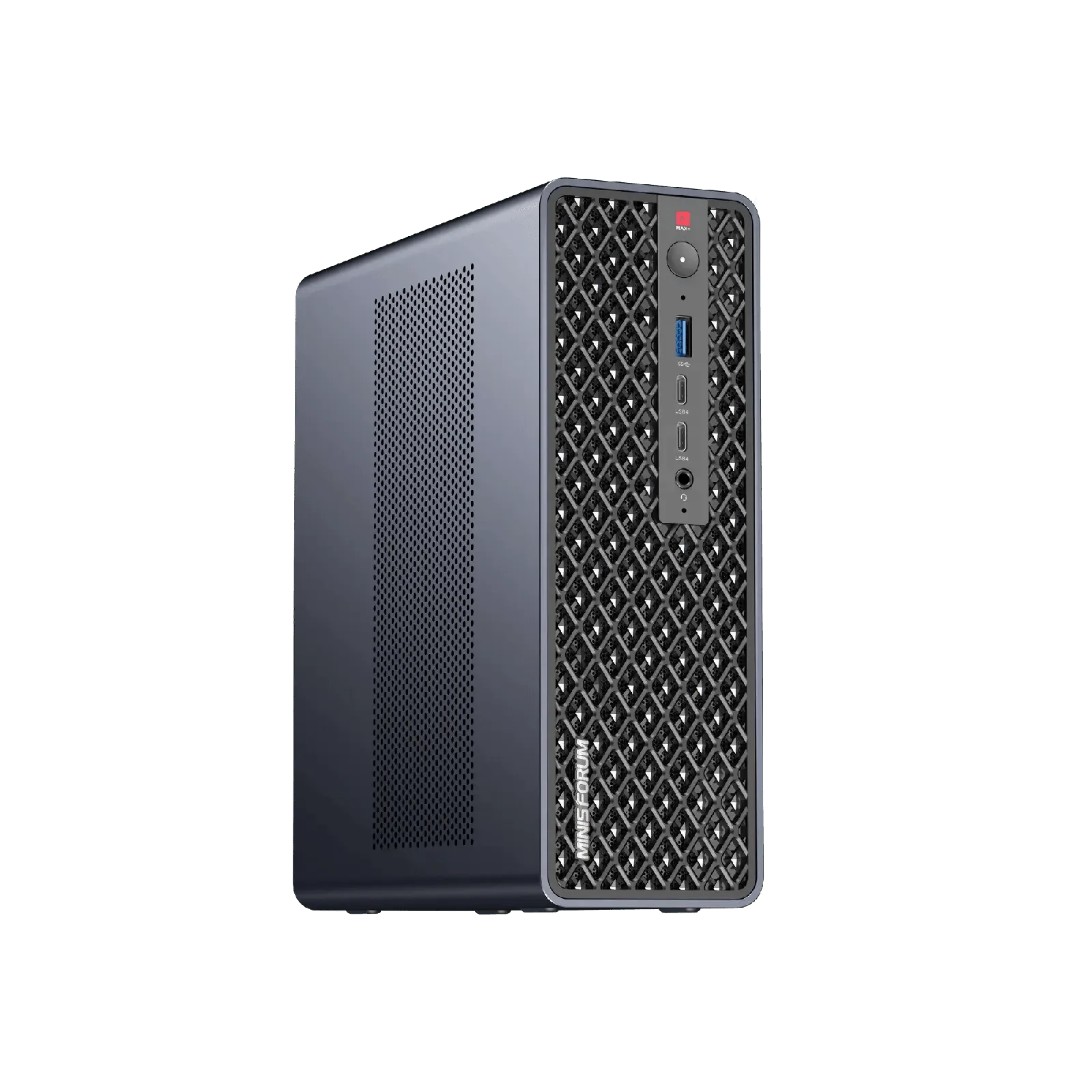
The company’s decision to keep the chassis identical to the original MS-S1 MAX is also a strategic choice. By reusing the six-heat-pipe, dual-blower cooler and the 320W power supply, they have ensured that the system remains compatible with existing 2U rack setups, allowing for seamless integration into existing server environments.
Implications for the Industry
The release of the MS-S1 MAX-P495 carries several implications for the future of hardware and AI development.
1. The Death of the "General Purpose" Mini PC
Minisforum is signaling a move away from the "do-it-all" mini-PC. The P495 is not for gaming or basic office productivity; it is a specialized tool. This trend toward "purpose-built" hardware is likely to continue as AI applications become more integrated into software workflows.
2. The Rise of Local Inference
As model quantization techniques improve and hardware memory capacities increase, the need to rely on massive, expensive server farms for every AI task will diminish. Devices like the P495 allow developers to test, train, and deploy sophisticated AI models in environments where internet connectivity is limited or where data sovereignty is a legal requirement.
3. The Value Proposition Dilemma
The price tag of $7,399 presents a barrier to entry. While it offers a significant boost in memory, the underlying APU is only a marginal improvement over the predecessor. For the vast majority of users, the original MS-S1 MAX with 128GB of RAM likely remains the superior value proposition. The P495 is a "niche-within-a-niche" product—it is designed for the high-end professional who knows exactly why they need that extra 64GB of RAM and is willing to pay the premium to get it in a compact, low-power-draw package.
Conclusion
The Minisforum MS-S1 MAX-P495 is a fascinating case study in modern hardware engineering. It acknowledges that in the age of generative AI, raw clock speed has been superseded by memory capacity and bandwidth. While it may not offer the massive performance leaps seen in other hardware sectors, its ability to run massive MoE models locally in a 3.5-liter box is a technical achievement that will be welcomed by AI researchers and developers worldwide.
As we look toward 2027 and beyond, the P495 stands as a testament to the fact that the most powerful computers are no longer the ones that occupy the most space, but the ones that make the most efficient use of the silicon and memory they are given. Whether this high-cost, high-memory strategy will pay off for Minisforum remains to be seen, but for now, they have set a new bar for what a "mini" workstation can actually do.