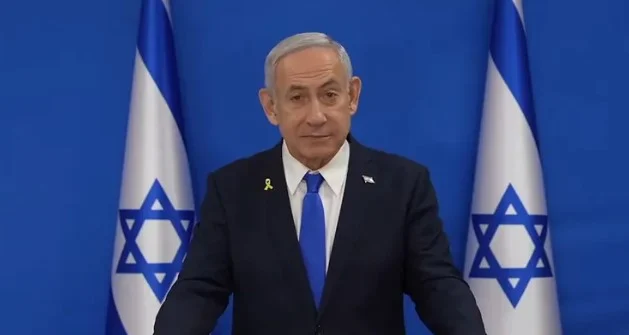
TEL AVIV, Israel – Israeli Prime Minister Benjamin Netanyahu convened an urgent security meeting at the military headquarters in Tel Aviv on Sunday, signaling a heightened state of alert amidst rapidly escalating tensions across the Middle East. The high-stakes discussions, held at the "Kyria" military compound, focused on critical developments concerning Iran, the Gaza Strip, and Lebanon, as regional anxieties about a potential wider conflict reach a fever pitch.
The extraordinary session brought together key figures in Israel’s defense establishment, including Defense Minister Israel Katz and other top-ranking security officials. The meeting underscores Israel’s deep concern over a confluence of destabilizing events, from recent Houthi rebel attacks on Saudi Arabian infrastructure to the ever-present threat of a direct confrontation between the United States and Iran, which analysts warn could plunge the entire region into an unprecedented crisis.
The Israeli leadership is reportedly assessing a range of scenarios and potential responses, as the strategic landscape of the Middle East becomes increasingly volatile. The discussions are not merely reactive but aim to formulate proactive strategies to safeguard Israel’s security interests in an environment where the margin for error is shrinking.
Main Facts: A Region on Edge
Prime Minister Benjamin Netanyahu’s decision to call an urgent security meeting highlights the gravity of the current geopolitical climate in the Middle East. The meeting, which took place at the "Kyria" military headquarters in Tel Aviv, was explicitly called to address the escalating security concerns facing Israel and the broader region. Key topics on the agenda included:
- Iran’s Regional Activities: The primary focus remains on Iran’s nuclear ambitions, its ballistic missile program, and its extensive network of proxy forces across the Middle East, which Israel views as an existential threat. The discussions likely encompassed Iran’s growing influence in Syria, its support for Hezbollah in Lebanon, and its alleged backing of various militant groups.
- The Gaza Strip: The humanitarian situation, ongoing blockade, and persistent rocket fire from Gaza-based militant groups like Hamas and Palestinian Islamic Jihad (PIJ) present a continuous security challenge for Israel. The meeting would have addressed potential escalation scenarios, intelligence assessments, and defensive measures.
- Lebanon and Hezbollah: The northern border with Lebanon remains a significant flashpoint, dominated by the presence and military capabilities of Hezbollah, a powerful Iranian-backed Shiite militant group and political party. Israel views Hezbollah’s vast arsenal of rockets and missiles as a direct threat to its population centers and infrastructure.
- Recent Houthi Attacks: The immediate catalyst for the heightened urgency was a series of drone and missile attacks carried out by Yemen’s Houthi rebels against critical infrastructure in Saudi Arabia on the preceding Sunday. These attacks, which targeted airports and facilities belonging to the Saudi national oil company Aramco, demonstrated the Houthis’ expanding capabilities and their willingness to strike deep into Saudi territory, widely believed to be enabled by Iranian support.
- U.S.-Iran Tensions: A pervasive concern discussed was the potential for further escalation in the standoff between the United States and Iran. The Trump administration’s "maximum pressure" campaign, coupled with Iranian retaliatory actions and threats to disrupt global shipping lanes, has created a dangerous dynamic that could easily spiral into military conflict, with profound implications for regional stability, including for Israel.
The participation of Defense Minister Israel Katz and other senior security officials underscores the comprehensive nature of the discussions, bringing together military intelligence, strategic planning, and operational expertise. The meeting serves as a clear indication that Israel is meticulously reviewing its defense posture and strategic options in light of the rapidly evolving and increasingly perilous regional environment.
Chronology of Escalation: A String of Provocations
The urgent security meeting convened by Prime Minister Netanyahu is not an isolated event but rather a direct response to a worrying chronology of events that have steadily ratcheted up tensions across the Middle East. This series of provocations and countermeasures has created a delicate and dangerous balance, pushing the region closer to the brink.
The Genesis of Renewed U.S.-Iran Tensions (2018-2019):
The current phase of U.S.-Iran friction largely began with the Trump administration’s withdrawal from the Joint Comprehensive Plan of Action (JCPOA), commonly known as the Iran nuclear deal, in May 2018. This was followed by the re-imposition and tightening of crippling economic sanctions on Iran, targeting its oil exports, financial sector, and other critical industries. The stated goal was to force Iran to negotiate a new, more comprehensive agreement addressing its ballistic missile program and regional activities. Iran, in response, initially sought to weather the storm but later began to incrementally roll back its commitments under the JCPOA, including exceeding uranium enrichment limits, signaling its frustration and putting pressure on European signatories to uphold their end of the deal.
Houthi Attacks and Regional Instability (Early 2019 – Present):
The conflict in Yemen, ongoing since 2014, has long been a proxy battleground between Iran and Saudi Arabia. The Houthi rebels, who control significant parts of Yemen, have steadily increased their capabilities, allegedly with Iranian assistance.
- May 2019: Houthi drones attacked two oil pumping stations in Saudi Arabia, demonstrating an ability to strike critical energy infrastructure.
- June 2019: A Houthi missile struck Abha International Airport in Saudi Arabia, injuring dozens. This was followed by multiple similar attacks on the same airport throughout the summer, disrupting civilian air travel and underscoring the persistent threat.
- September 2019 (The Immediate Precedent): On the Sunday preceding Netanyahu’s meeting, Houthi rebels claimed responsibility for a significant series of drone and missile attacks targeting Saudi Arabian infrastructure. These strikes reportedly hit airports and facilities of the state-owned oil giant Aramco. While the precise extent of the damage was not immediately clear, the symbolism of targeting such vital economic assets was profound, sending ripples of concern through global energy markets and security establishments. These attacks underscored the Houthis’ growing reach and the potential for a localized conflict to have wider regional and international repercussions.
Attacks on Shipping and Naval Incidents (Mid-2019):
The Strait of Hormuz, a crucial choke point for global oil shipments, became a focal point of tension.
- May 2019: Several oil tankers were attacked off the coast of Fujairah in the UAE, with the U.S. and Saudi Arabia attributing the attacks to Iran, which Tehran denied.
- June 2019: Two more tankers were attacked in the Gulf of Oman. Simultaneously, Iran shot down a U.S. RQ-4 Global Hawk surveillance drone over the Strait of Hormuz, claiming it had violated Iranian airspace. The U.S. denied this, asserting the drone was in international airspace. This incident brought the U.S. and Iran to the brink of military confrontation, with President Trump reportedly approving and then calling off retaliatory strikes at the last minute.
Israeli Operations in Syria and Lebanon:
Israel has for years conducted numerous airstrikes in Syria, targeting Iranian military installations, arms shipments to Hezbollah, and attempts by Iran to entrench itself militarily near Israel’s border. These operations, often unconfirmed by Israel but widely reported, are part of Israel’s strategy to prevent the establishment of a "northern front" by Iran and its proxies. More recently, there have been reports of Israeli drone activities and alleged airstrikes in Lebanon, targeting Hezbollah assets, which have drawn sharp condemnations from Beirut and heightened the risk of an open conflict on Israel’s northern border.
Gaza Border Tensions:
The Gaza Strip remains a perpetual source of low-level conflict. Despite ceasefires, sporadic rocket fire from Gaza into Israel and Israeli retaliatory strikes are a regular occurrence. The ongoing blockade, humanitarian crisis, and political deadlock fuel extremist sentiments and ensure a cycle of violence that occasionally flares into larger military confrontations, requiring constant vigilance from Israeli security forces.
This intricate web of events – from direct attacks on critical infrastructure to the brinkmanship in international waters and proxy conflicts – forms the backdrop against which Prime Minister Netanyahu convened his urgent security meeting. Each incident, while distinct, contributes to an overarching sense of instability and the growing fear of a wider regional conflagration.
Supporting Data: The Volatile Ecosystem of the Middle East
Understanding the full scope of Netanyahu’s security meeting requires a deep dive into the complex geopolitical ecosystem of the Middle East, characterized by intertwined conflicts, powerful state and non-state actors, and significant global implications, particularly concerning energy security.
The Iranian Axis of Resistance:
Iran’s regional strategy is often described as an "axis of resistance," aimed at projecting power, challenging U.S. and Israeli influence, and securing its strategic depth. Key components include:
- Hezbollah (Lebanon): Widely considered Iran’s most potent non-state ally, Hezbollah possesses a sophisticated arsenal of tens of thousands of rockets and missiles, a well-trained fighting force, and significant political influence in Lebanon. Its presence on Israel’s northern border represents a constant, formidable threat.
- Hamas & Palestinian Islamic Jihad (Gaza): While not as directly controlled as Hezbollah, these Palestinian militant groups in Gaza receive varying degrees of financial, military, and ideological support from Iran. Their rocket capabilities pose a direct threat to Israeli civilian centers.
- Houthi Rebels (Yemen): The Houthis have demonstrated increasing sophistication in drone and missile technology, allowing them to target Saudi Arabia and disrupt shipping lanes. This capability is widely attributed to Iranian assistance and training, despite Tehran’s denials.
- Militias in Iraq & Syria: Iran backs numerous Shiite militias in Iraq (e.g., Popular Mobilization Forces) and Syria (e.g., various pro-Assad groups), which have played crucial roles in regional conflicts and serve as conduits for Iranian influence and arms transfers.
Israel’s Security Doctrine:
Israel’s security doctrine is built on deterrence, early warning, and decisive response. Given its geographic vulnerabilities and the nature of threats from state and non-state actors, Israel maintains a highly advanced military and intelligence apparatus. Its "campaign between the wars" strategy (CBW) involves continuous covert and overt operations, particularly in Syria, to degrade enemy capabilities and prevent Iranian entrenchment, without triggering an all-out war. The Iron Dome missile defense system is a cornerstone of its defensive capabilities, intercepting thousands of rockets over the years.
The U.S. Presence and Strategy:
The United States maintains a significant military presence in the Middle East, with bases and naval assets across the Gulf region. Its strategy under the Trump administration has been one of "maximum pressure" against Iran, aiming to cut off its revenue streams and compel it to negotiate a new nuclear deal and cease its destabilizing regional activities. This has included extensive sanctions, diplomatic isolation, and occasional military deployments to deter Iranian aggression. The U.S. also plays a critical role in supporting key regional allies like Saudi Arabia and the UAE.
Energy Security and Global Impact:
The Middle East is the world’s primary source of oil and natural gas, with the Strait of Hormuz being the single most important chokepoint for global oil transit. Approximately 20% of the world’s petroleum liquids pass through this strait daily. Any disruption, whether through attacks on tankers or blockades, sends immediate shockwaves through global energy markets, leading to oil price spikes and threatening the stability of the global economy. The recent Houthi attacks on Aramco facilities highlight this vulnerability and the potential for non-state actors to have outsized economic consequences.
Internal Dynamics:
Beyond the external threats, internal political dynamics also play a role. In Israel, Netanyahu’s long tenure has often been defined by his tough stance on security. His political future, often intertwined with his perceived ability to protect Israel, adds another layer of complexity to decision-making. In Iran, the hardliners and the Revolutionary Guard Corps wield significant power, influencing policy and often favoring confrontation over compromise.
This intricate web of state and non-state actors, combined with vital economic interests and historical grievances, creates an extremely volatile environment where miscalculation or an unintended incident could rapidly escalate into a catastrophic regional conflict. The data paints a picture of a region saturated with military capabilities and ideological fervor, making the search for de-escalation ever more urgent and challenging.
Official Responses: Navigating a Labyrinth of Statements and Threats
The current climate of heightened tensions has elicited a wide array of official responses from key regional and international players, each reflecting their respective interests, alliances, and strategic postures. These statements often involve a delicate balance of warnings, condemnations, and calls for de-escalation, underscoring the complex diplomatic and military chessboard of the Middle East.
Israel’s Stance:
Prime Minister Netanyahu and other Israeli officials have consistently maintained a hawkish stance on Iran, labeling it the primary threat to regional stability and Israel’s security.
- Netanyahu’s Rhetoric: Netanyahu has repeatedly vowed to prevent Iran from acquiring nuclear weapons and to counter its regional entrenchment, particularly in Syria. He has often used strong language, warning that Israel would "do whatever is necessary" to protect itself.
- Defense Minister Katz: Defense Minister Israel Katz has echoed these sentiments, emphasizing Israel’s right to self-defense and its readiness to act against any threats from Iran or its proxies. His participation in the urgent security meeting signals a unified and resolute front from the defense establishment.
- Actions, Not Just Words: Israel’s responses are not confined to rhetoric. Its long-standing policy of conducting airstrikes in Syria against Iranian targets and Hezbollah arms convoys, though often unconfirmed, serves as a tangible demonstration of its commitment to its red lines. The calling of this urgent meeting itself is an official response, indicating a serious evaluation of potential military and diplomatic courses of action.
The United States’ Position:
Under the Trump administration, the U.S. policy towards Iran has been one of "maximum pressure," aiming to compel Tehran to negotiate a more comprehensive deal.
- Sanctions and Deterrence: The U.S. has systematically tightened sanctions on Iran, targeting its oil exports, financial institutions, and key figures within the Revolutionary Guard Corps. Concurrently, it has deployed additional military assets to the region, including aircraft carriers and Patriot missile batteries, as a deterrent against Iranian aggression.
- Calls for De-escalation (with conditions): While asserting its readiness to defend its interests and allies, the U.S. has also maintained that it does not seek war with Iran. Secretary of State Mike Pompeo has repeatedly stated that the U.S. is open to negotiations "without preconditions," though Iran views the existing sanctions as a precondition in themselves.
- Condemnation of Houthi Attacks: The U.S. has condemned the Houthi attacks on Saudi Arabia, often linking them to Iranian support and emphasizing the need for international action against destabilizing actors.
Iran’s Official Line:
Iran has consistently rejected U.S. demands, viewing the "maximum pressure" campaign as an act of economic warfare and a violation of international law.
- Resistance to Sanctions: Iranian officials, including Supreme Leader Ayatollah Ali Khamenei and President Hassan Rouhani, have vowed to resist U.S. pressure and have called for regional dialogue and security arrangements that exclude external powers.
- Warnings Against Aggression: Iran has issued strong warnings against any military aggression, vowing "crushing responses" to any attacks on its territory or interests. It has also threatened to close the Strait of Hormuz if its oil exports are completely halted.
- Denial of Direct Involvement: While acknowledging political support for various groups, Iran routinely denies direct involvement in attacks attributed to its proxies, such as the Houthi assaults on Saudi Arabia. It frames its actions as defensive and aimed at countering U.S. and Israeli hegemony.
Saudi Arabia and Gulf States:
Saudi Arabia, directly impacted by the Houthi attacks, has condemned them as acts of terrorism and has called for international action against the perpetrators and their backers.
- Calls for International Pressure: Saudi officials have urged the international community to take a firm stance against Iranian "malign activities" and its support for proxy groups. They view Iran as the primary destabilizing force in the region.
- Defensive Measures: The Kingdom has reinforced its air defenses and has continued its military campaign in Yemen against the Houthis, despite growing international concern over the humanitarian crisis there.
International Community and UN:
The broader international community, including the United Nations and European powers, has largely expressed deep concern over the escalating tensions and called for restraint and de-escalation.
- Calls for Dialogue: European nations, particularly, have attempted to mediate between the U.S. and Iran, urging both sides to de-escalate and return to diplomatic engagement. They have also tried to salvage the JCPOA.
- Humanitarian Concerns: The UN has consistently highlighted the dire humanitarian situation in Yemen, urging all parties to the conflict to protect civilians and facilitate aid delivery.
The tapestry of these official responses reveals a deeply fractured region where trust is scarce, and the path to de-escalation is fraught with challenges. Each statement, whether a warning or a plea for peace, contributes to the complex strategic calculus that Prime Minister Netanyahu and his security team are currently undertaking.
Implications: The Ripple Effect of a Volatile Region
The urgent security meeting in Tel Aviv underscores the profound implications of the escalating Middle East crisis, which extend far beyond the immediate flashpoints and carry significant consequences for Israel, the region, and the global community. The potential for a wider conflict is not merely theoretical; it is a palpable threat with far-reaching ripple effects.
Implications for Israel:
- Multi-Front Conflict: The primary concern for Israel is the potential for a multi-front conflict. Escalation with Iran could trigger simultaneous confrontations with Hezbollah in the north (Lebanon/Syria) and Hamas/PIJ in the south (Gaza). Such a scenario would strain Israel’s military resources, test its missile defense systems like Iron Dome and David’s Sling, and expose its civilian population to unprecedented levels of rocket fire.
- Economic Strain: A large-scale conflict would impose immense economic costs on Israel, disrupting daily life, halting tourism, impacting trade, and requiring massive expenditure on defense and reconstruction.
- Internal Cohesion: While external threats often rally public support, a prolonged or highly destructive conflict could test internal political cohesion, particularly given Israel’s often-fractured political landscape.
- Strategic Dilemmas: Israel faces the constant strategic dilemma of responding forcefully enough to deter aggression without inadvertently triggering an all-out war. The meeting likely focused on calibrating these responses.
Implications for Iran:
- Increased Isolation and Economic Hardship: Further escalation could lead to even tighter international sanctions, pushing Iran’s already struggling economy closer to collapse. This could fuel internal dissent and destabilize the regime.
- Direct Military Confrontation: A miscalculation could lead to a direct military confrontation with the U.S. or Israel, which would be devastating for Iran’s military capabilities and infrastructure.
- Regional Backlash: While Iran relies on its proxies, an overt escalation could alienate some regional actors and solidify a broader anti-Iranian coalition.
Implications for the United States:
- Military Engagement and Casualties: A direct conflict with Iran would inevitably lead to U.S. military engagement, potential casualties, and immense financial costs, drawing resources away from other global priorities.
- Global Standing: The outcome of any conflict, whether perceived as a victory or a quagmire, would significantly impact U.S. global standing, its alliances, and its strategic influence.
- Domestic Political Fallout: Any large-scale military action would have profound domestic political consequences, particularly in an election year.
Implications for Regional Stability:
- Humanitarian Catastrophe: A full-blown regional conflict would undoubtedly lead to a humanitarian catastrophe on an unimaginable scale, displacing millions, exacerbating existing refugee crises, and causing immense loss of life.
- Economic Devastation: Beyond oil price spikes, a conflict would shatter regional economies, disrupt trade routes, and deter investment for decades.
- Radicalization and Extremism: The chaos and destruction could create fertile ground for the resurgence of extremist groups, further destabilizing already fragile states.
- Proxy Wars Intensified: Existing proxy conflicts, such as those in Yemen and Syria, would likely intensify, drawing in more regional and international actors.
- Energy Market Disruption: The most immediate global impact would be a severe disruption to global energy markets. Attacks on oil infrastructure or attempts to close the Strait of Hormuz would send oil prices skyrocketing, potentially triggering a global recession.
- Global Shipping and Trade: Beyond oil, major shipping lanes would become perilous, disrupting global supply chains and impacting international trade.
- Diplomatic Fallout: A regional war would severely strain international relations, challenge multilateral institutions like the UN, and could create new geopolitical alignments and rivalries.
The discussions in Netanyahu’s urgent security meeting are thus not merely about Israel’s immediate defense but about navigating a complex web of potential outcomes that could redefine the Middle East and send shockwaves across the globe. The decisions made, or avoided, in the coming days and weeks will have lasting consequences for millions. The path to de-escalation remains narrow, requiring concerted diplomatic efforts, clear communication, and a shared understanding of the catastrophic costs of miscalculation.